For generations, the phrase "root canal" has carried an unfortunate and completely undeserved reputation in popular culture. Mentioning endodontic treatment often conjures vivid images of painful dental procedures and intimidating instruments. However, as any credentialed dental professional will tell you, modern endodontic therapy does not cause pain—it is the very procedure that eliminates pain. At Cleopatra Dental, under the compassionate clinical guidance of Dr. George Mirsal, DDS, BDS, MHA, we utilize advanced rotary nickel-titanium instrumentation, digital apex sensing, and profound pulpal anesthesia to ensure your root canal treatment is gentle, efficient, and virtually painless.
Our overarching clinical philosophy is conservative and tooth-preserving. While modern dental implants represent a magnificent achievement for replacing missing teeth, nothing can match the biological perfection, natural proprioception, and tactile chewing sensation of your own natural tooth. Root canal therapy is your natural tooth's ultimate lifeline—a sophisticated biological intervention designed to remove internal infection, halt microbial spread, and preserve your natural smile for a lifetime.
Pulpal Biology: Understanding Irreversible Pulpitis & Tooth Infections
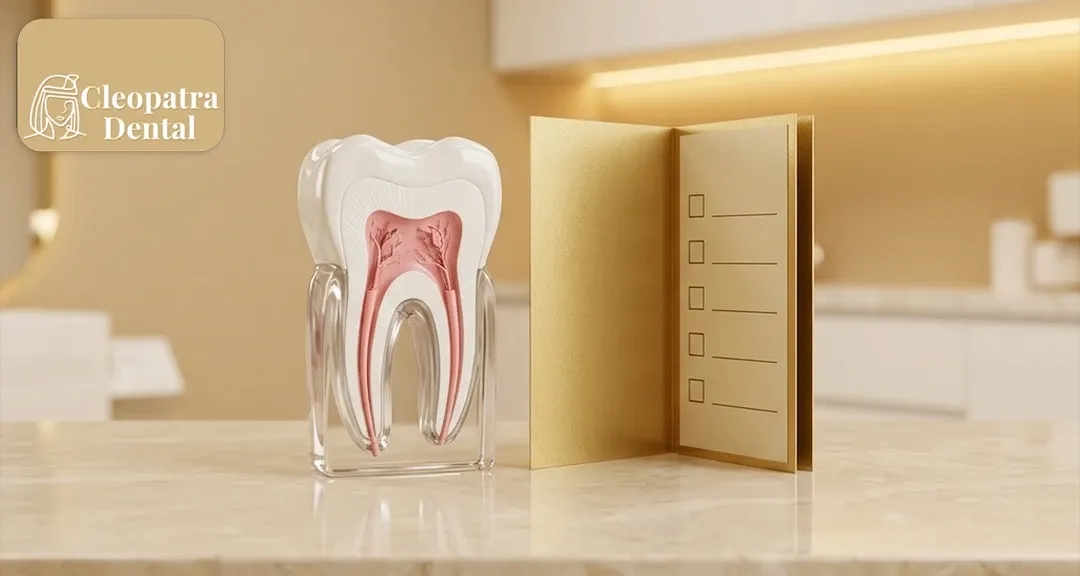
To understand why root canal therapy is necessary, it helps to examine the microscopic anatomy of a human tooth. The visible outer layer of your tooth is enamel, the hardest substance in the human body. Beneath the enamel lies dentin, a slightly softer, mineralized tissue honeycombed with millions of microscopic fluid-filled tubules. At the deepest center of the tooth, protected within the pulp chamber and narrow root canals, resides the living dental pulp. This pulp contains an intricate network of sensitive nerves, microscopic blood vessels, and connective tissues that nourished the tooth during its growth and development.
Although the enamel and dentin form a formidable protective barrier, several clinical factors can breach this armor and allow oral bacteria to invade the sterile pulp chamber:
- Deep Carious Decay: When untreated tooth decay penetrates through the enamel and dentin, bacteria reach the pulp, triggering an active inflammatory response.
- Repeated Restorative Procedures: Teeth that have undergone multiple fillings or extensive restorations can experience cumulative thermal and chemical trauma, gradually compromising pulpal vitality.
- Microscopic Enamel Fractures: Subtle hairline stress fractures or cracked tooth syndrome allow saliva and oral bacteria to seep directly into the pulp space over time.
- Physical Blunt Trauma: A sports impact or traumatic blow to the jaw can sever the delicate blood supply entering the tooth root apex, causing the pulp tissue to undergo sterile necrosis even without visible exterior fractures.
The Progression from Pulpitis to Periapical Abscess
When bacteria first invade the pulp, the tissue becomes inflamed—a condition known as reversible pulpitis. At this early stage, you might feel brief, mild sensitivity to hot coffee or ice water that subsides within a few seconds once the stimulus is removed. If treated promptly with a conservative restoration, the pulp can heal completely.
However, if the bacterial assault continues, the inflammation becomes irreversible. The dental pulp swells, but because it is enclosed within rigid, unyielding dentin walls, internal hydrostatic pressure rises sharply. This pressure compresses the delicate sensory nerves, producing intense, spontaneous, throbbing tooth pain that lingers for minutes or hours after thermal exposure, often keeping you awake at night. Eventually, the compressed blood vessels collapse, depriving the pulp of oxygen and nutrients. The pulp tissue undergoes necrosis (tissue death).
Once the pulp tissue dies, the sharp nerve pain may temporarily vanish, leading patients to falsely assume the problem has cured itself. In reality, the necrotic pulp chamber becomes an ideal breeding ground for aggressive anaerobic bacteria. Microbial toxins travel down the length of the root canal and exit through the apical foramen into the surrounding jawbone. The body mounts an acute immune defense, resulting in a periapical abscess—a painful accumulation of pus beneath the tooth root that causes agonizing tenderness when chewing, gum swelling, facial cellulitis, and rapid localized bone destruction.
Why Antibiotics Alone Cannot Cure an Infected Tooth
A frequent misconception among patients is that a course of oral antibiotics (such as amoxicillin or clindamycin) can cure a tooth infection and eliminate the need for a root canal. It is vital to understand the biological reality: oral antibiotics travel through your bloodstream to reach infected tissues. Once the dental pulp inside your tooth becomes necrotic, the blood vessels inside the root canals have collapsed completely. There is zero blood circulation inside the dead tooth chamber. Consequently, oral antibiotics circulating in your blood cannot penetrate the inside of the tooth where the bacterial colonies reside. While antibiotics may temporarily relieve swelling in the surrounding gum tissues, the infection will inevitably resurge until the necrotic biological debris is physically cleared from the root canals.
The Truth About Root Canals: Debunking the Pain Myth
Where did the notorious reputation of root canals originate? Decades ago, before the development of modern local anesthetics, electronic diagnostic tools, and flexible motorized instruments, clearing root canals was a slow, manual procedure that could cause significant discomfort. Today, endodontic therapy has been transformed by medical technology.
At Cleopatra Dental, patient comfort is our absolute priority. We begin every procedure by administering targeted, profound local pulpal anesthesia. Using buffered anesthetic formulas that match your body's natural pH, we eliminate the stinging sensation associated with dental injections and achieve deep, complete pulpal numbness within minutes. For patients experiencing severe anxiety or apprehension, we provide comforting nitrous oxide ("laughing gas") sedation, soothing music, and a warm, supportive chairside environment. When performed with modern techniques, getting a root canal feels remarkably similar to receiving a routine composite filling. You will feel gentle vibration and light pressure, but the agonizing nerve pain you arrived with will be completely resolved.
Gentle High-Precision Rotary Endodontics
Dr. George Mirsal utilizes state-of-the-art rotary endodontic technology to ensure that root canal therapy is performed with microscopic precision, speed, and gentle care. Traditional endodontic procedures relied on stiff, manual stainless-steel hand files to scrape the canal walls. Because natural root canals are frequently curved, tapered, and anatomically complex, manual steel files carried risks of canal transportation, ledging, or incomplete cleaning.
Our practice utilizes motorized Rotary Nickel-Titanium (NiTi) file systems. Nickel-titanium is a space-age alloy possessing extraordinary flexibility and shape memory. As the motorized rotary handpiece gently glides through the root canal, the flexible NiTi file smoothly follows the natural organic curvature of your canal without altering its natural anatomy. This rotary motion efficiently cleans and shapes the canal in a fraction of the time required by outdated manual techniques.
To ensure total anatomical precision, we utilize high-frequency Electronic Apex Locators. These advanced digital sensors measure electrical resistance along the canal, pinpointing the microscopic apical constriction at the tip of the root with sub-millimeter accuracy. This eliminates the need for repeated trial X-rays and prevents over-instrumentation beyond the root apex. Throughout the procedure, we perform continuous ultrasonic irrigation with antimicrobial solutions to flush out microscopic bacteria, dissolved pulpal remnants, and microscopic debris from lateral micro-canals. Once completely sanitized and dried, the root canals are three-dimensionally sealed with biocompatible gutta-percha and bioceramic hermetic sealers, permanently barring bacteria from re-entering.
The Vital Step: Permanent Crown Restoration & Preventing Coronal Microleakage
Successfully cleaning and sealing your root canals represents only the first phase of saving your tooth. The second, equally critical step is placing a high-strength permanent dental crown. Many patients wonder why an immediate dental crown is necessary once their toothache pain is gone.
There are two compelling biological reasons why a post-endodontic tooth must be restored with a permanent crown:
- Preventing Brittleness and Catastrophic Tooth Fracture: When the living dental pulp is removed, the tooth loses its internal blood and nutrient supply. Over time, the dentin becomes dehydrated and structurally brittle. Furthermore, most teeth requiring root canals have already lost substantial natural enamel from large cavities, deep fractures, or old fillings. Under the heavy chewing forces of everyday eating (which can exceed 200 pounds of pressure on back molars), an unprotected, hollowed-out tooth is at extreme risk of splitting vertically in half. A vertical root fracture is catastrophic and cannot be repaired, forcing the tooth to be extracted. A custom crown provides 360-degree ferrule encirclement, binding the tooth structure together and protecting it against heavy occlusal forces.
- Preventing Coronal Microleakage: The temporary filling placed immediately after your root canal is only designed to last a few weeks. If a permanent crown is delayed, microscopic bacteria in your saliva will gradually seep around the margins of the temporary filling—a process known as coronal microleakage. These bacteria can re-infect the gutta-percha filling and cause recurrent periapical infection, requiring costly retreatment or surgical extraction.
At Cleopatra Dental, we coordinate your endodontic therapy seamlessly with custom protective dental crowns and bridges. Crafted from monolithic zirconia or high-strength porcelain, your custom crown is shade-matched to your surrounding teeth, restoring full chewing power, structural stability, and lifelike aesthetics.
While our first priority is always saving your natural dentition through gentle root canal treatment, there are rare cases where a tooth exhibits extensive non-restorable structural damage or a deep vertical fracture extending beneath the bone level. In such complex instances, Dr. Mirsal provides honest, transparent clinical guidance regarding tooth extraction as a last resort, followed by comprehensive planning for permanent dental implant tooth replacement to restore your complete dental health.
Key Takeaways: Advanced Endodontics at Cleopatra Dental
- Root Canals Relieve Pain: Modern endodontic therapy stops severe toothaches and clears deep infections—it does not cause pain.
- High-Precision Rotary NiTi Technology: Flexible nickel-titanium motorized instruments and digital apex locators navigate complex canal curves quickly, smoothly, and comfortably.
- Saving Natural Teeth is Paramount: Preserving your natural tooth maintains your natural jawbone architecture, normal chewing mechanics, and lifelong dental alignment.
- Crown Restoration is Mandatory: Placing a permanent custom crown protects the devitalized tooth from brittle fracture and seals out oral bacteria permanently.
Frequently Asked Questions: Root Canals & Endodontic Care
1. Does getting a root canal hurt?
No. Modern root canal treatment is virtually painless. The historical reputation of endodontics stems from techniques used decades ago before the advent of modern profound local anesthetics and flexible rotary files. At Cleopatra Dental, Dr. George Mirsal utilizes buffered anesthetics that numb the tooth deeply and completely before any work begins. In reality, a root canal provides immediate relief from the excruciating, throbbing pain caused by an inflamed or infected dental nerve, and the procedure itself feels very similar to receiving a standard dental filling.
2. Why can't I just take antibiotics to cure a tooth infection instead of getting a root canal?
Antibiotics travel through your bloodstream to fight bacterial infections throughout the body. However, once the dental pulp inside your tooth becomes necrotic (dies), the blood vessels inside the root canals have collapsed. Because there is no active blood flow within the dead tooth, oral antibiotics cannot reach the bacteria hiding inside the root canal system. While antibiotics may temporarily reduce swelling in surrounding gum tissues, the infection will inevitably resurge until the infected tissue is physically removed through root canal therapy.
3. Why is a dental crown necessary after a root canal?
When a tooth undergoes root canal therapy, the living pulp tissue and blood vessels are removed, causing the remaining tooth structure to become dehydrated and more brittle over time. Furthermore, teeth requiring root canals have typically lost significant enamel from deep decay or extensive fractures. Placing a custom dental crown provides 360-degree reinforcement, protecting the tooth from fracturing under heavy chewing forces and hermetically sealing the tooth against oral bacteria to prevent coronal microleakage and recurrent infection.
4. How long does a root canal procedure take, and what is the recovery time?
Most routine root canal treatments at Cleopatra Dental are completed in a single comfortable appointment lasting between 60 and 90 minutes. Complex molars with multiple curved or calcified canals may occasionally require two visits to ensure thorough antibacterial disinfection. Post-treatment recovery is typically very fast; any mild residual tenderness in the surrounding gum tissues or jaw joint is easily managed with over-the-counter anti-inflammatory medications (like ibuprofen) and generally subsides completely within 24 to 48 hours.
Relieve Tooth Pain Today: Schedule in Riverside or Yorba Linda
You do not have to endure another night of throbbing tooth pain or face unnecessary tooth loss. At Cleopatra Dental, Dr. George Mirsal and our caring clinical team are dedicated to helping you save your natural teeth in an environment designed for your comfort, dignity, and peace of mind.
If you are experiencing tooth pain, thermal sensitivity, or gum tenderness, contact us right away. Schedule your gentle evaluation at our Cleopatra Dental Riverside office on Van Buren Boulevard or visit our modern Yorba Linda dental practice on Yorba Linda Boulevard. We are here to relieve your pain and restore your healthy, confident smile.