8 Clinical Differences Between Invisalign Aligners & Clear Braces
October 23, 2026
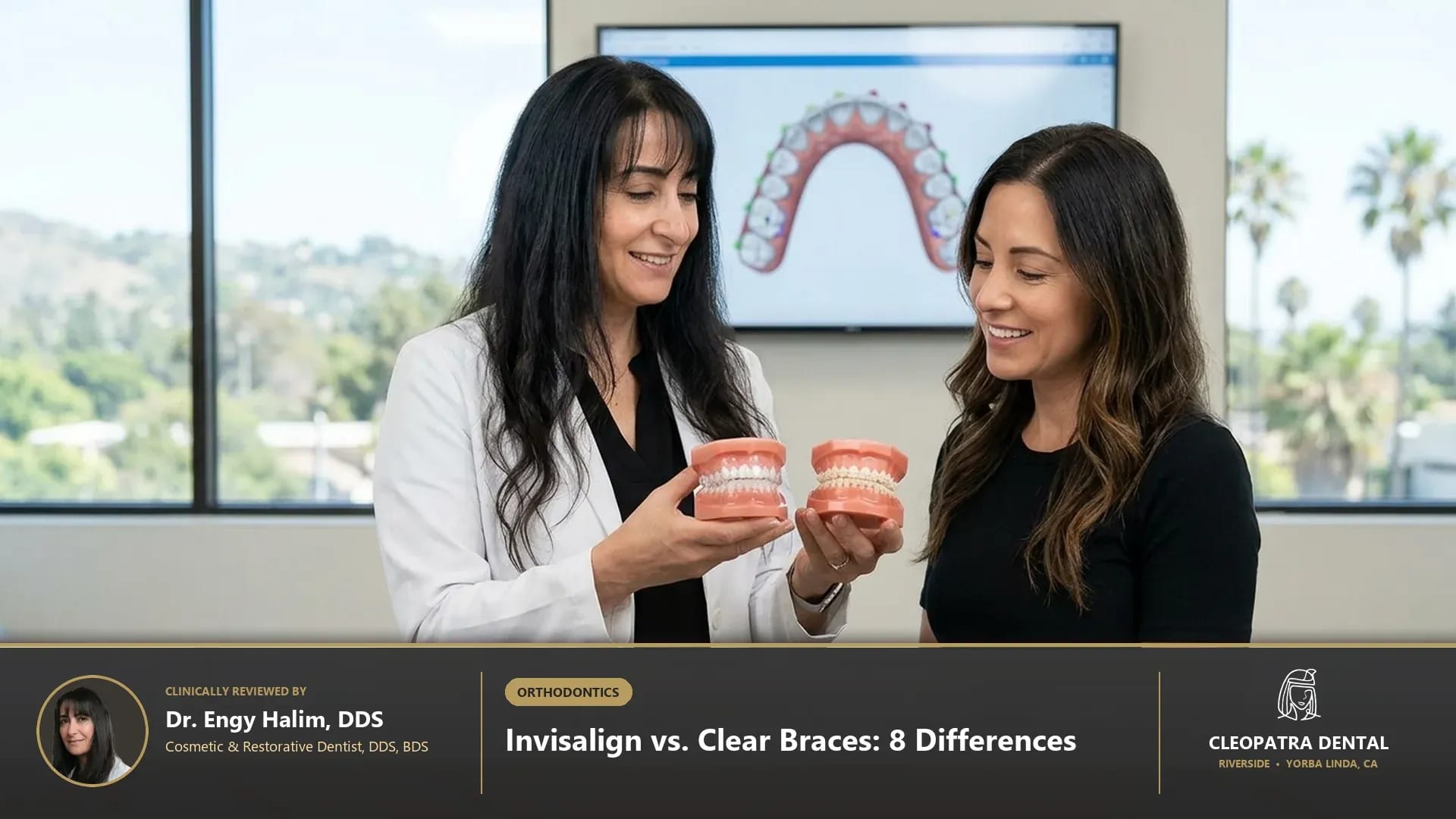
Quick Verified Summary: The 8 clinical differences between Invisalign clear aligners and ceramic clear braces center on removability, force biomechanics, oral hygiene, root resorption risk, emergency visits, dietary freedom, bracket staining, and treatment duration (CDT D8080/D8090). FDA 510(k)-cleared SmartTrack aligners use programmed push forces, whereas fixed polycrystalline alumina brackets use archwire pull tension.
Clinical Foundations: Understanding 8 Clinical Differences Between Invisalign Aligners & Clear Braces
Patients researching invisalign vs clear braces in Southern California deserve transparent, evidence-based guidance rooted in biological tooth preservation and long-term oral systemic health. At Cleopatra Dental, our general, restorative, and surgical clinicians evaluate every patient as a complete biomechanical system rather than treating isolated symptoms. In daily practice across Western Riverside County and North Orange County, we find that panoramic/cephalometric digital imaging (CDT D0330/D0340) and iTero intraoral optical scanning map Angle Class I, II, and III malocclusions, overjet, overbite, and interproximal enamel reduction (IPR) requirements. This diagnostic precision prevents guesswork, minimizes chairside discomfort, and establishes predictable clinical outcomes for families and older adults alike. Straighten crowded, spaced, or maloccluded teeth discreetly with Invisalign clear aligner orthodontics planned via 3D optical scanning.
Modern dentistry has evolved rapidly away from aggressive mechanical preparation toward minimally invasive, biologically guided care. When evaluating invisalign clear braces, our diagnostic team examines how enamel thickness, underlying dentin tubules, periodontal ligament fibers, and occlusal biting forces interact over a 10- to 20-year horizon. By integrating digital optical scanning, low-dose imaging, and biocompatible materials coded under ADA CDT standards (D8080, D8090, D8670, D8680), we tailor each treatment plan to your specific anatomy, medical history, and comfort preferences. Preview your final tooth alignment before wearing your first tray through our 3D Digital Smile Design and orthodontic simulation.
Biological & Biomechanical Principles Behind invisalign clear braces
Every clinical decision in restorative and preventive dentistry depends on respecting microscopic tissue thresholds. Scientific studies confirm that Invisalign SmartTrack multilayer aromatic thermoplastic polyurethane-copolyester trays deliver calibrated 0.25 mm incremental push movements and up to 2 degrees of rotation per tray with SmartForce composite attachments, whereas ceramic braces rely on nickel-titanium (NiTi) archwire deflection and elastomeric ligatures that lose 50% of force within 24 hours and create friction. When these quantitative parameters are carefully controlled at the chairside, natural dental tissues and prosthetic restorations withstand daily mastication forces—which routinely reach 70 to 150 pounds per square inch during normal chewing and exceed 250 pounds per square inch during nocturnal clenching—without premature wear, sensitivity, or structural fatigue. Maximize your aligner tracking speed by following our essential daily do’s and don’ts of wearing Invisalign clear aligners.
Advanced Biomaterials and Digital Diagnostic Standards
Material science plays an equally decisive role in clinical longevity and biocompatibility. In our clinical protocols, we utilize FDA 510(k)-cleared Class II Invisalign SmartTrack removable aligners (CDT D8080 adolescent / D8090 adult) vs. bonded monocrystalline or polycrystalline aluminum oxide (alumina) ceramic brackets with clear elastic o-rings and Teflon-coated or metal archwires. Unlike legacy dental materials that relied on mechanical wedging or high-expansion metals, contemporary ceramic, polymer, and biologic systems bond adhesively or integrate directly with host tissues. This seals out cariogenic oral bacteria, maintains neutral salivary pH balance, and delivers natural optical translucency that blends seamlessly with your surrounding smile. Student and adult athletes in orthodontic treatment should also read why athletes in braces or aligners need a custom sports mouthguard.
Side-by-Side Clinical Comparison & Candidacy Matrix
Choosing the right clinical pathway requires comparing treatment modalities across biological conservation, expected service life, patient comfort, and maintenance requirements. During your consultation, our doctors review high-resolution intraoral photographs with you on a chairside monitor so you can see exactly what we see. The clinical comparison matrix below summarizes how each diagnostic and therapeutic option performs in real-world practice. Learn how we verify root parallelism and bone levels safely in how low-dose digital dental X-rays and 3D scans guide orthodontics.
| Clinical Comparison Dimension | Invisalign Clear Aligners (FDA 510(k)-Cleared) | Ceramic Clear Braces (Polycrystalline Alumina) | Clinical Winner & Patient Impact |
|---|---|---|---|
| 1. Aesthetics & Ligature Staining | Virtually invisible medical-grade polyurethane trays; replaced every 7–14 days | Tooth-colored brackets do not stain, but clear elastic ties turn yellow from coffee/curry | Invisalign: Fresh unstained tray every week; zero visible archwire |
| 2. Biomechanical Force Delivery | 3D-programmed push forces wrapped 360° around clinical crown + SmartForce attachments | Pull/tension forces via archwire; ceramic slot friction slows sliding tooth movement | Invisalign for mild-moderate arches; Braces for severe impacted canines or >45° premolar rotations |
| 3. Oral Hygiene & White-Spot Risk | Remove trays to brush and floss normally; 70% lower plaque & decalcification risk | Fixed brackets trap plaque; requires threaders and increases white-spot enamel scars | Invisalign: Ideal for adult periodontal health and caries prevention |
| 4. Dietary Restrictions & Enamel Wear | Zero food restrictions (trays removed for meals); trays protect against nocturnal grinding | No popcorn, nuts, sticky candy, or hard apples; hard ceramic brackets can abrade opposing enamel | Invisalign: Safe for deep bites where lower incisors hit upper brackets |
| 5. Treatment Duration & Chair Time | Average 9 to 15 months; brief 15-minute progress checks every 6–8 weeks | Average 14 to 24 months; 30-minute wire adjustments every 4 weeks + broken bracket repairs | Invisalign: 30%–40% fewer office visits and zero poking wire emergencies |
How We Customize Candidacy for Complex Medical Histories
No two mouths age or heal identically. Patients managing systemic conditions such as Type 2 diabetes, hypertension, autoimmune disorders, osteoporosis, or medication-induced dry mouth (xerostomia) require customized dental protocols. Before initiating treatment related to clear aligners vs ceramic braces, we review your current medications, allergies, and systemic health markers. Adjusting local anesthetic buffering, selecting hypoallergenic metal-free ceramics, and reinforcing salivary mineral buffering ensures safe, predictable healing for every age group.
Preventing Common Complications and Premature Failure
Even the finest dental restoration or preventive regimen requires protection against mechanical overload and bacterial biofilm accumulation. In clinical audits, the two leading causes of preventable dental breakdown are unaddressed nighttime teeth grinding (sleep bruxism) and interproximal plaque stagnation along the gumline. Addressing occlusal harmony early and establishing an easy-to-follow home care routine protects both your natural enamel and any restorative work for decades.
Long-Term Maintenance & Preventive Follow-Up in Southern California
Sustaining healthy clinical results over 10 to 20 years depends on partnering with a consistent dental team that monitors your gum attachment levels, bite balance, and restorative margins at every six-month checkup. At our Riverside and Yorba Linda locations, we combine ultrasonic hygiene care, digital bitewing monitoring, and occlusal nightguard checks to catch micro-changes long before they become costly emergencies.
2026 Cost Guide, ADA CDT Codes & PPO Insurance in Riverside and Yorba Linda
Financial clarity is a core pillar of patient trust at Cleopatra Dental. Treatment fees in Southern California vary according to diagnostic complexity, the number of teeth or quadrants involved, laboratory biomaterial selection, and your dental PPO insurance benefits. Before any procedure begins, our treatment coordinators verify your insurance eligibility and provide a clear, written breakdown organized by official American Dental Association Current Dental Terminology (CDT) codes.
Important Pricing Note: The prices shown in the table below are estimated ranges; to obtain accurate pricing tailored to your specific clinical needs and insurance coverage, please contact our Riverside or Yorba Linda office.
| Orthodontic Treatment Tier & ADA CDT Code | Estimated Cost & Price Range (2026) | PPO Orthodontic Coverage & Monthly Payment Notes |
|---|---|---|
| Express / Mild Relapse Clear Aligners (Up to 10 Trays, D8090) | $2,450 – $3,600 | Corrects minor anterior crowding or post-braces shifting in 3–5 months |
| Moderate Invisalign or Clear Braces Arch Alignment (D8080 / D8090) | $3,800 – $5,200 | 6 to 12 months; PPO lifetime orthodontic benefit ($1,500–$2,500) applies equally to both |
| Comprehensive Full-Arch Invisalign or Ceramic Braces (D8080 / D8090) | $4,900 – $6,800 | Includes all refinement trays, IPR, and digital scans; $149–$199/mo via CareCredit/LendingClub |
| 3D iTero Digital Orthodontic Simulation & Records (D0350 / D0470) | $250 – $450 | Complimentary or credited 100% toward active Invisalign treatment upon enrollment |
| Post-Orthodontic Vivera Clear Retainers (4-Set Package, D8680) | $450 – $750 | Essential lifetime retention protocol to prevent periodontal fiber elastic relapse |
Maximizing Dental PPO Insurance, HSA/FSA Funds & 0% Financing
Most PPO dental insurance plans categorize diagnostic exams, digital X-rays, and routine cleanings under preventive benefits covered at 80% to 100%, while basic and major restorative procedures receive 50% to 80% coverage up to your annual plan maximum (typically $1,500 to $2,500 per calendar year). For treatments that exceed annual insurance caps or involve elective cosmetic enhancements, patients can apply tax-free Health Savings Account (HSA) or Flexible Spending Account (FSA) dollars, or enroll in 0% APR promotional monthly financing through CareCredit, LendingClub, and Proceed Finance.
Step-by-Step Clinical Protocol & Long-Term Care Guidelines
Knowing exactly what happens before, during, and after your visit eliminates dental anxiety and empowers you to participate actively in your oral health. Our clinical workflow enforces 20-to-22-hour daily wear compliance for removable aligners vs. 24/7 fixed bracket bonding; preventing white-spot enamel decalcification lesions and gingival hyperplasia through uninhibited flossing with removable trays. By breaking complex care into calm, well-paced stages, we ensure your comfort from initial check-in through long-term maintenance. Putty-free iTero Element 5D scans and Invisalign consultations are available at our Yorba Linda orthodontic and aligner studio.
Step 1: Comprehensive Digital Assessment and Shade/Bite Mapping
Your appointment begins with a conversation about your goals, symptoms, and past dental experiences, followed by gentle digital diagnostics. Using radiation-free iTero 3D optical scanning, intraoral high-definition cameras, and ultra-low-dose digital radiographs when indicated, we map your teeth, gums, and bite registration within minutes—eliminating messy impression trays and providing an immediate 3D visual roadmap of your mouth. Inland Empire teens and adults can also schedule comprehensive orthodontic comparisons at Cleopatra Dental in Riverside, CA.
Step 2: Precision Chairside Execution and Post-Care Verification
During active care, we prioritize profound comfort using topical numbing gels, pH-buffered local anesthetics, and optional nitrous oxide or oral conscious sedation. Every margin, contact point, and biting surface is verified under high magnification before you leave the chair. You also receive written post-visit care instructions and a direct follow-up call from our clinical team to confirm your recovery is progressing smoothly.
Frequently Asked Questions About 8 Clinical Differences Between Invisalign Aligners & Clear Braces
Are ceramic clear braces faster or slower than Invisalign clear aligners?
For mild-to-moderate crowding, spacing, and overbites, Invisalign is typically 3 to 5 months faster than ceramic clear braces. Ceramic brackets create higher sliding friction against the metal archwire than traditional steel brackets and are more brittle, forcing orthodontists to apply lighter, slower forces to avoid fracturing the ceramic wings.
When are fixed clear braces a better choice than Invisalign?
Fixed ceramic braces have an advantage in two scenarios: first, when a patient (such as a young teen) knows they will forget to wear removable trays for the mandatory 20 to 22 hours per day; and second, when complex vertical extrusion of impacted canines or cylindrical root torque of severely rotated premolars (> 45 degrees) is required.
Why can ceramic clear braces rarely be placed on lower front teeth in deep-bite patients?
Alumina ceramic is significantly harder than natural human tooth enamel (9 on the Mohs hardness scale vs. 5 for enamel). If you have a deep overbite where the biting edges of your upper front teeth strike the front of your lower teeth, ceramic lower brackets will rapidly grind away your upper tooth enamel—whereas soft polyurethane Invisalign trays actually cushion both arches.
Does dental insurance pay the same amount for Invisalign as for clear braces?
Yes! In 2026, PPO dental insurance policies with orthodontic riders (under ADA CDT codes D8080 for teens and D8090 for adults) reimburse the exact same lifetime orthodontic benefit—typically $1,500 to $2,500—whether you choose Invisalign clear aligners or fixed ceramic braces.
Verified Branch & Location: Visit Cleopatra Dental in Yorba Linda at 18651 Yorba Linda Blvd, Yorba Linda, CA 92886 (serving East Lake Village, Travis Ranch, Bryant Ranch, Kerrigan Ranch, Anaheim Hills, and Placentia near Yorba Linda Blvd and Imperial Hwy), or view directions and verified patient reviews on Cleopatra Dental Yorba Linda Invisalign & orthodontics on Google Maps.
Clinically & Technically Reviewed By:
Dr. Engy Halim, DDS, BDS — General & Cosmetic Dentist
Dr. George Mirsal, DDS, BDS, MHA — General & Implant Dentist
Medical Disclaimer: This content is clinically reviewed for educational purposes in accordance with American Dental Association (ADA) and Dental Board of California guidelines and does not replace a direct in-person dental examination.