What Is a Proper Daily Dental Care Routine? ADA Brushing & Flossing
October 28, 2026
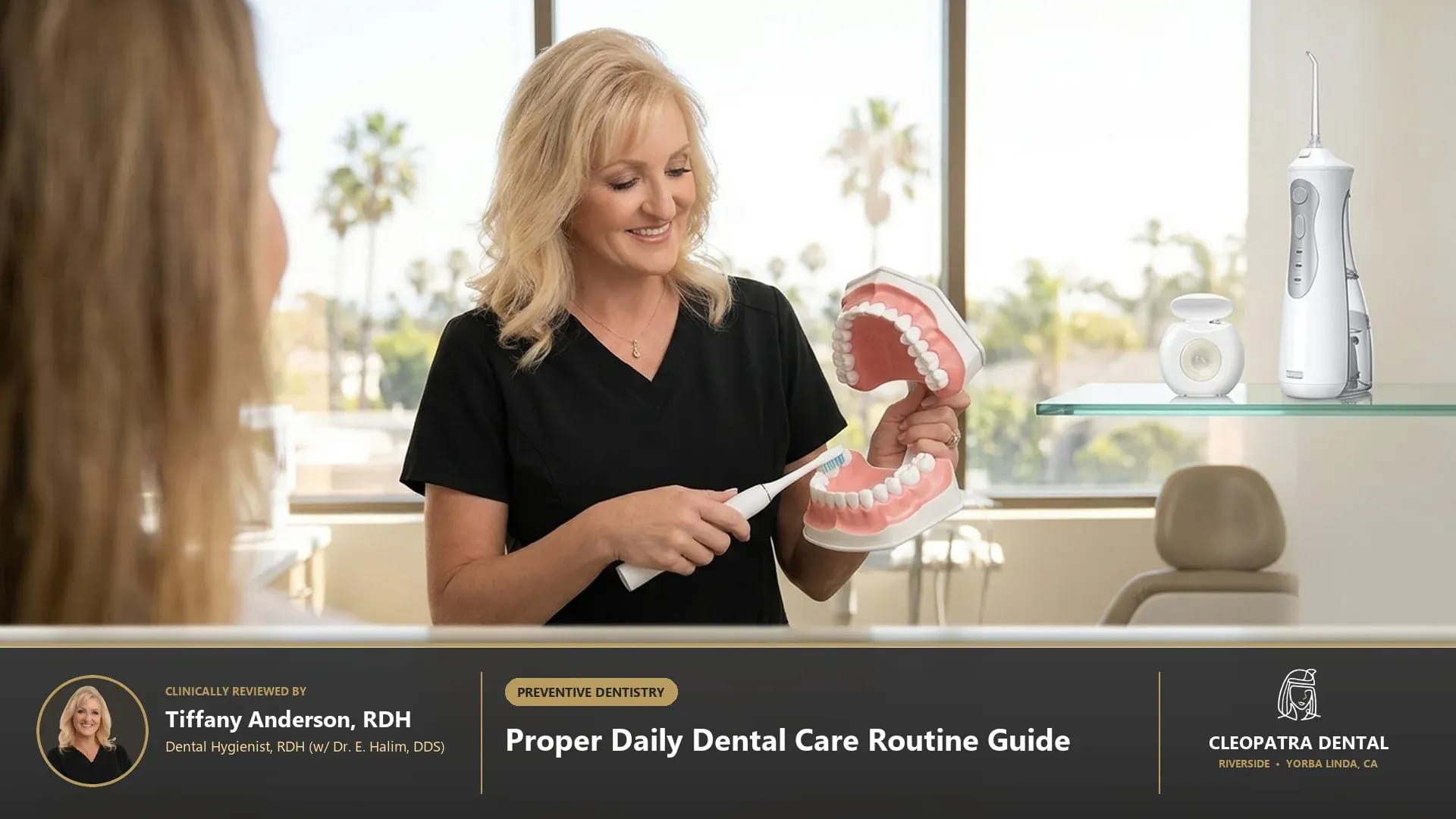
Quick Verified Summary: An evidence-based daily dental care routine in Riverside and Yorba Linda follows a strict chronological sequence: floss interdental contacts first using a C-shape hug, rinse with water or alcohol-free mouthwash, brush for 2 full minutes twice daily at a 45-degree angle with a soft sonic/oscillating toothbrush and 1,100 ppm fluoride toothpaste, and spit out excess foam without rinsing with water.
Clinical Foundations: Understanding What Is a Proper Daily Dental Care Routine? ADA Brushing & Flossing
Patients researching oral care routine in Southern California deserve transparent, evidence-based guidance rooted in biological tooth preservation and long-term oral systemic health. At Cleopatra Dental, our general, restorative, and surgical clinicians evaluate every patient as a complete biomechanical system rather than treating isolated symptoms. In daily practice across Western Riverside County and North Orange County, we find that evaluating Gingival Index (bleeding on probing across 6 sites per tooth), O’Leary Plaque Score (target < 10% plaque coverage), salivary buffering pH, and toothbrush abrasion lesions during Oral Hygiene Instruction (CDT D1330). This diagnostic precision prevents guesswork, minimizes chairside discomfort, and establishes predictable clinical outcomes for families and older adults alike. Pair your daily home plaque control with biannual professional dental cleanings and periodontal maintenance at our clinic.
Modern dentistry has evolved rapidly away from aggressive mechanical preparation toward minimally invasive, biologically guided care. When evaluating dental care routine, our diagnostic team examines how enamel thickness, underlying dentin tubules, periodontal ligament fibers, and occlusal biting forces interact over a 10- to 20-year horizon. By integrating digital optical scanning, low-dose imaging, and biocompatible materials coded under ADA CDT standards (D1110, D1206, D1330, D4910), we tailor each treatment plan to your specific anatomy, medical history, and comfort preferences. If years of aggressive horizontal scrubbing with a hard toothbrush have exposed sensitive roots, we provide minimally invasive gum recession treatment.
Biological & Biomechanical Principles Behind dental care routine
Every clinical decision in restorative and preventive dentistry depends on respecting microscopic tissue thresholds. Scientific studies confirm that randomized controlled trials demonstrate that interdental flossing BEFORE brushing removes 35% to 40% more interproximal plaque and increases interdental fluoride ion concentration by 30%, while spitting without rinsing ("spit, don’t rinse") keeps 1,000–1,500 ppm sodium/stannous fluoride in contact with enamel for 30+ minutes instead of washing 90% down the sink. When these quantitative parameters are carefully controlled at the chairside, natural dental tissues and prosthetic restorations withstand daily mastication forces—which routinely reach 70 to 150 pounds per square inch during normal chewing and exceed 250 pounds per square inch during nocturnal clenching—without premature wear, sensitivity, or structural fatigue. See how our hygienists remove calcified tartar that home brushing cannot budge in step-by-step guide to what happens during a professional dental cleaning.
Advanced Biomaterials and Digital Diagnostic Standards
Material science plays an equally decisive role in clinical longevity and biocompatibility. In our clinical protocols, we utilize ADA-Accepted oscillating-rotating or sonic power toothbrush with a built-in pressure sensor (< 150 grams of bristle force) and soft end-rounded nylon bristles, 0.4% stannous fluoride or 0.24% sodium fluoride low-abrasivity toothpaste (RDA <= 70), expanding woven dental floss + water flosser, and stainless-steel tongue scraper. Unlike legacy dental materials that relied on mechanical wedging or high-expansion metals, contemporary ceramic, polymer, and biologic systems bond adhesively or integrate directly with host tissues. This seals out cariogenic oral bacteria, maintains neutral salivary pH balance, and delivers natural optical translucency that blends seamlessly with your surrounding smile. Learn how periodic bitewing imaging verifies that your home flossing is preventing interproximal cavities in the clinical truth about low-dose digital dental X-rays.
Side-by-Side Clinical Comparison & Candidacy Matrix
Choosing the right clinical pathway requires comparing treatment modalities across biological conservation, expected service life, patient comfort, and maintenance requirements. During your consultation, our doctors review high-resolution intraoral photographs with you on a chairside monitor so you can see exactly what we see. The clinical comparison matrix below summarizes how each diagnostic and therapeutic option performs in real-world practice. Patients wearing clear orthodontic trays should also read daily oral hygiene do’s and don’ts for Invisalign patients.
| Chronological Routine Step | Evidence-Based Clinical Technique | Duration & Timing Rule | Why Order & Technique Matter |
|---|---|---|---|
| Step 1: Interdental Flossing + Water Flosser | Wrap floss in a "C-shape" hugging each tooth 1–2 mm beneath the gum sulcus | 60 – 90 seconds BEFORE brushing (especially at bedtime) | Opens interproximal spaces so toothpaste fluoride can penetrate between molars |
| Step 2: Tongue Debridement & Pre-Brush Rinse | Scrape dorsal tongue from back to front 3–4 times; swish water or mouthwash now | 15 – 30 seconds before applying fluoride toothpaste | Removes 80% of volatile sulfur halitosis compounds; rinsing before brushing avoids washing off toothpaste fluoride later |
| Step 3: Modified Bass 45° Power Brushing | Angle soft bristles 45° toward the gumline; spend 30 seconds per quadrant | 2 full minutes twice daily (wait 30 min after acidic coffee/juice) | Disrupts subgingival plaque biofilm without scrubbing away gum tissue or acid-softened enamel |
| Step 4: "Spit, Don’t Rinse" Fluoride Retention | Spit out excess toothpaste foam and leave the thin microscopic fluoride film on teeth | Zero water or mouthwash for 30 minutes after brushing | Maintains salivary fluoride reservoir 4x higher overnight to remineralize early white-spot lesions |
| Step 5: Daytime Xylitol & Water Buffering | Swish plain water or chew 100% xylitol gum for 5 minutes after lunch and snacks | After meals when brushing is unavailable | Stimulates bicarbonate-rich saliva to neutralize Streptococcus mutans lactic acid within minutes |
How We Customize Candidacy for Complex Medical Histories
No two mouths age or heal identically. Patients managing systemic conditions such as Type 2 diabetes, hypertension, autoimmune disorders, osteoporosis, or medication-induced dry mouth (xerostomia) require customized dental protocols. Before initiating treatment related to what is a proper dental care routine, we review your current medications, allergies, and systemic health markers. Adjusting local anesthetic buffering, selecting hypoallergenic metal-free ceramics, and reinforcing salivary mineral buffering ensures safe, predictable healing for every age group.
Preventing Common Complications and Premature Failure
Even the finest dental restoration or preventive regimen requires protection against mechanical overload and bacterial biofilm accumulation. In clinical audits, the two leading causes of preventable dental breakdown are unaddressed nighttime teeth grinding (sleep bruxism) and interproximal plaque stagnation along the gumline. Addressing occlusal harmony early and establishing an easy-to-follow home care routine protects both your natural enamel and any restorative work for decades.
Long-Term Maintenance & Preventive Follow-Up in Southern California
Sustaining healthy clinical results over 10 to 20 years depends on partnering with a consistent dental team that monitors your gum attachment levels, bite balance, and restorative margins at every six-month checkup. At our Riverside and Yorba Linda locations, we combine ultrasonic hygiene care, digital bitewing monitoring, and occlusal nightguard checks to catch micro-changes long before they become costly emergencies.
2026 Cost Guide, ADA CDT Codes & PPO Insurance in Riverside and Yorba Linda
Financial clarity is a core pillar of patient trust at Cleopatra Dental. Treatment fees in Southern California vary according to diagnostic complexity, the number of teeth or quadrants involved, laboratory biomaterial selection, and your dental PPO insurance benefits. Before any procedure begins, our treatment coordinators verify your insurance eligibility and provide a clear, written breakdown organized by official American Dental Association Current Dental Terminology (CDT) codes.
Important Pricing Note: The prices shown in the table below are estimated ranges; to obtain accurate pricing tailored to your specific clinical needs and insurance coverage, please contact our Riverside or Yorba Linda office.
| Preventive Professional Support & Home Tools (ADA CDT) | Estimated Cost & Price Range (2026) | Preventive ROI & PPO Coverage Notes |
|---|---|---|
| Adult Prophylaxis Cleaning & Oral Hygiene Coaching (D1110 + D1330) | $115 – $195 | Removes calcified tartar every 6 months; covered 100% by virtually all PPO dental plans |
| In-Office 5% Sodium Fluoride Varnish Application (D1206) | $40 – $75 | 22,600 ppm fluoride boost for sensitive roots or high caries risk; covered for kids & many adults |
| Prescription 1.1% Neutral Sodium Fluoride (5,000 ppm) Toothpaste | $18 – $28 | Dispensed chairside for patients with dry mouth, orthodontic aligners, or frequent cavities |
| ADA-Accepted Sonic or Oscillating Toothbrush + Water Flosser | $80 – $180 | One-time HSA/FSA eligible home investment; reduces gingivitis bleeding by 50%+ vs. manual brush |
| Replacement Soft Brush Heads (Every 90 Days) | $20 – $35 / Year | Worn, splayed bristles lose 40% plaque removal efficiency and scratch gingival margins |
Maximizing Dental PPO Insurance, HSA/FSA Funds & 0% Financing
Most PPO dental insurance plans categorize diagnostic exams, digital X-rays, and routine cleanings under preventive benefits covered at 80% to 100%, while basic and major restorative procedures receive 50% to 80% coverage up to your annual plan maximum (typically $1,500 to $2,500 per calendar year). For treatments that exceed annual insurance caps or involve elective cosmetic enhancements, patients can apply tax-free Health Savings Account (HSA) or Flexible Spending Account (FSA) dollars, or enroll in 0% APR promotional monthly financing through CareCredit, LendingClub, and Proceed Finance.
Step-by-Step Clinical Protocol & Long-Term Care Guidelines
Knowing exactly what happens before, during, and after your visit eliminates dental anxiety and empowers you to participate actively in your oral health. Our clinical workflow enforces Supervised under CA B&P § 1907–1926 by Dr. George Mirsal, DDS alongside Tiffany Anderson, RDH and JoAnne Schram, RDH; enforcing the 30-minute post-meal acid rule (waiting 30 minutes after coffee, citrus, or wine before brushing so saliva raises pH from 4.0 back above 5.5). By breaking complex care into calm, well-paced stages, we ensure your comfort from initial check-in through long-term maintenance. Personalized plaque-disclosing coaching and oral hygiene evaluations are included at our Riverside dental hygiene studio.
Step 1: Comprehensive Digital Assessment and Shade/Bite Mapping
Your appointment begins with a conversation about your goals, symptoms, and past dental experiences, followed by gentle digital diagnostics. Using radiation-free iTero 3D optical scanning, intraoral high-definition cameras, and ultra-low-dose digital radiographs when indicated, we map your teeth, gums, and bite registration within minutes—eliminating messy impression trays and providing an immediate 3D visual roadmap of your mouth. Families in North Orange County can also book preventive hygiene checkups at Cleopatra Dental in Yorba Linda.
Step 2: Precision Chairside Execution and Post-Care Verification
During active care, we prioritize profound comfort using topical numbing gels, pH-buffered local anesthetics, and optional nitrous oxide or oral conscious sedation. Every margin, contact point, and biting surface is verified under high magnification before you leave the chair. You also receive written post-visit care instructions and a direct follow-up call from our clinical team to confirm your recovery is progressing smoothly.
Frequently Asked Questions About What Is a Proper Daily Dental Care Routine? ADA Brushing & Flossing
Should I floss before or after I brush my teeth?
Always floss BEFORE you brush! A landmark randomized clinical trial published in the Journal of Periodontology proved that flossing first loosens plaque and food debris trapped between teeth so they get washed out, and allows the fluoride from your toothpaste to coat the newly opened surfaces between your teeth—reducing interproximal cavities significantly.
Why shouldn’t I rinse my mouth with water or mouthwash right after brushing?
Your toothpaste contains 1,000 to 1,500 parts per million (ppm) of active fluoride ions designed to soak into your enamel over the next 30 minutes. Rinsing with a mouthful of tap water or even fluoride mouthwash (which only contains ~225 ppm fluoride) immediately after brushing washes 90% of that concentrated fluoride down the drain. Simply spit out the extra foam and walk away!
Why is brushing immediately after drinking morning coffee or orange juice bad for enamel?
Coffee (pH ~4.8), orange juice (pH ~3.5), and sparkling water temporarily drop your mouth’s pH below the critical 5.5 threshold, softening the microscopic outer layer of tooth enamel for 20 to 30 minutes. Brushing right away mechanically scrubs off that softened mineral layer. Instead, brush BEFORE breakfast, or swish with plain water after coffee and wait 30 minutes before brushing.
Can a water flosser completely replace traditional string dental floss?
A water flosser is fantastic for flushing out deep periodontal pockets, cleaning under dental bridges and around implants, and reducing gum bleeding, so using both is the gold standard. However, sticky plaque biofilm clings tightly to the flat contact point where two natural teeth touch—like mud on a windshield—and requires the physical scraping wipe of string floss to break up 100% of the contact biofilm.
Verified Branch & Location: Visit Cleopatra Dental in Riverside at 2955 Van Buren Boulevard, Ste H4, Riverside, CA 92503 (serving Arlington, La Sierra, Canyon Crest, Wood Streets, Orangecrest, and Corona near Van Buren Blvd and CA-91), or view directions and verified patient reviews on Cleopatra Dental Riverside preventive hygiene center on Google Maps.
Clinically & Technically Reviewed By:
Dr. George Mirsal, DDS, BDS, MHA — General & Implant Dentist
Tiffany Anderson, RDH, BBA — Registered Dental Hygienist (Supervised by DDS per CA B&P § 1907–1926)
JoAnne Schram, RDH, BVoc, MEA — Registered Dental Hygienist (Supervised by DDS per CA B&P § 1907–1926)
Medical Disclaimer: This content is clinically reviewed for educational purposes in accordance with American Dental Association (ADA) and Dental Board of California guidelines and does not replace a direct in-person dental examination.