Sports Mouthguard vs. Occlusal Night Guard for Bruxism: Key Differences
October 28, 2026
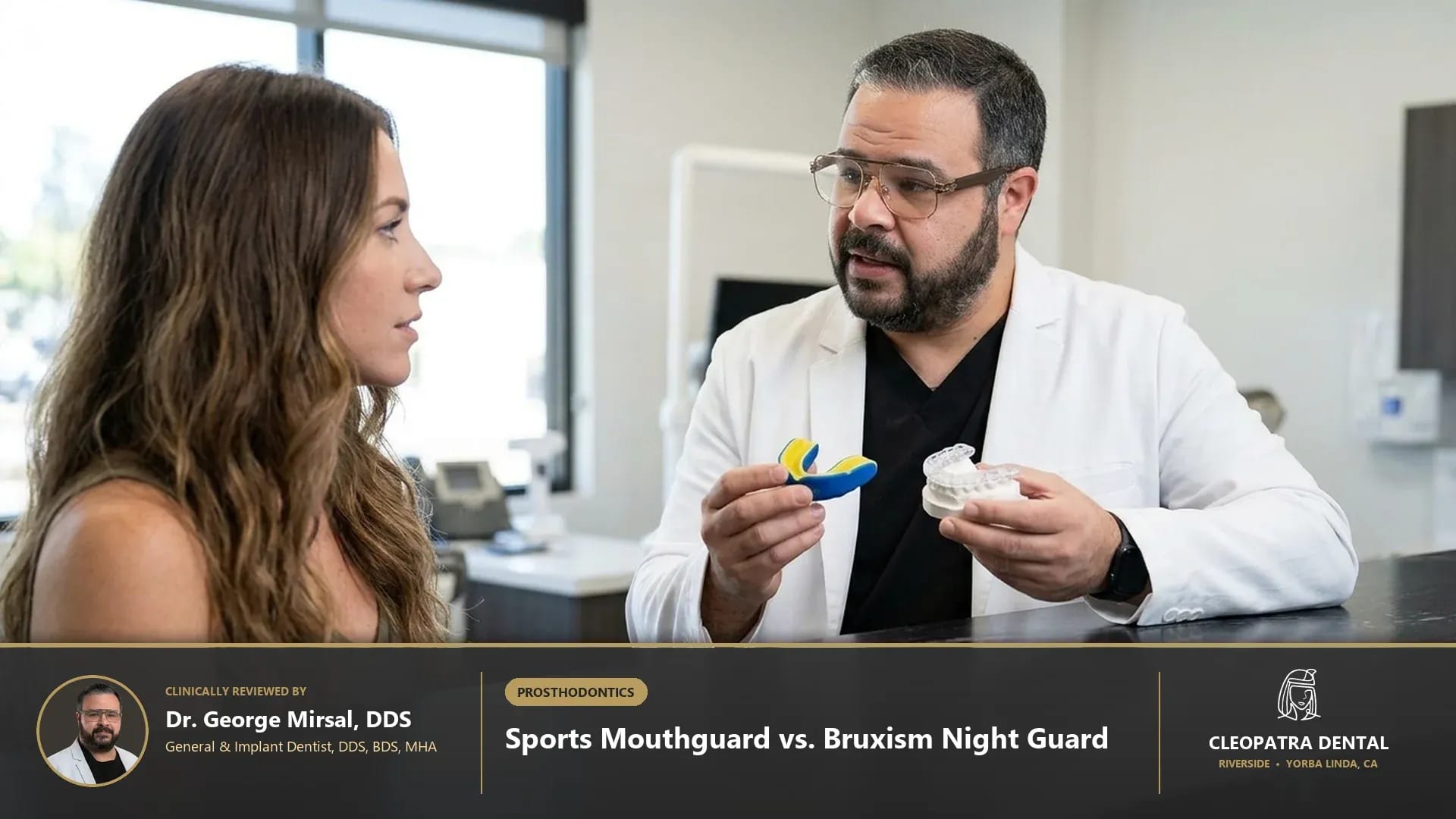
Quick Verified Summary: A sports mouthguard (CDT D9941) and an occlusal night guard for bruxism (CDT D9944–D9946) are engineered for opposite forces. Sports guards use thick 3.0 to 5.0 mm EVA rubber to absorb external impacts over teeth and gums, whereas custom night guards use thin 1.5 to 2.0 mm hard or dual-laminate acrylic for friction-free jaw gliding and reduced clenching.
Clinical Foundations: Understanding Sports Mouthguard vs. Occlusal Night Guard for Bruxism: Key Differences
Patients researching mouthguard vs night guard in Southern California deserve transparent, evidence-based guidance rooted in biological tooth preservation and long-term oral systemic health. At Cleopatra Dental, our general, restorative, and surgical clinicians evaluate every patient as a complete biomechanical system rather than treating isolated symptoms. In daily practice across Western Riverside County and North Orange County, we find that identifying clinical signs of nocturnal sleep bruxism: flat occlusal attrition facets exposing yellow dentin, cervical abfraction wedges, linea alba buccal mucosa ridging, scalloped tongue borders, and masseter/temporalis muscle hypertrophy. This diagnostic precision prevents guesswork, minimizes chairside discomfort, and establishes predictable clinical outcomes for families and older adults alike. Protect natural enamel as well as bruxism-resistant zirconia crowns and bridges from destructive nighttime grinding forces.
Modern dentistry has evolved rapidly away from aggressive mechanical preparation toward minimally invasive, biologically guided care. When evaluating mouth guard for teeth grinding, our diagnostic team examines how enamel thickness, underlying dentin tubules, periodontal ligament fibers, and occlusal biting forces interact over a 10- to 20-year horizon. By integrating digital optical scanning, low-dose imaging, and biocompatible materials coded under ADA CDT standards (D9944, D9945, D9946, D9941), we tailor each treatment plan to your specific anatomy, medical history, and comfort preferences. When clenching has fractured a single molar cusp without ruining the entire tooth, we restore strength using conservative ceramic inlays and onlays.
Biological & Biomechanical Principles Behind mouth guard for teeth grinding
Every clinical decision in restorative and preventive dentistry depends on respecting microscopic tissue thresholds. Scientific studies confirm that nocturnal clenching generates up to 250 to 300 psi of vertical and lateral shearing force (lack of protective清醒 periodontal mechanoreceptor inhibition during REM/NREM micro-arousals); wearing a chewy, soft EVA sports guard at night triggers a central nervous system chewing reflex that increases masseter EMG activity by 10% to 30%. When these quantitative parameters are carefully controlled at the chairside, natural dental tissues and prosthetic restorations withstand daily mastication forces—which routinely reach 70 to 150 pounds per square inch during normal chewing and exceed 250 pounds per square inch during nocturnal clenching—without premature wear, sensitivity, or structural fatigue. To learn how custom hard acrylic stabilization splints decompress jaw joints and protect vertical dimension, read our comprehensive TMJ and occlusal splint therapy guide.
Advanced Biomaterials and Digital Diagnostic Standards
Material science plays an equally decisive role in clinical longevity and biocompatibility. In our clinical protocols, we utilize ADA CDT D9944 (full-arch hard heat-cured PMMA or 3D-milled acrylic occlusal guard, 1.5–2.0 mm thickness with flat plane canine disclusion), D9945 (soft guard for mild clenching/bleaching sensitivity), and D9946 (hard outer copolyester shell with soft inner polyurethane liner) vs. D9941 (soft 4 mm EVA athletic mouthguard covering gingival mucosa). Unlike legacy dental materials that relied on mechanical wedging or high-expansion metals, contemporary ceramic, polymer, and biologic systems bond adhesively or integrate directly with host tissues. This seals out cariogenic oral bacteria, maintains neutral salivary pH balance, and delivers natural optical translucency that blends seamlessly with your surrounding smile. If nighttime teeth grinding has already chipped a porcelain restoration, consult our clinical guide on repairing or replacing a broken dental crown.
Side-by-Side Clinical Comparison & Candidacy Matrix
Choosing the right clinical pathway requires comparing treatment modalities across biological conservation, expected service life, patient comfort, and maintenance requirements. During your consultation, our doctors review high-resolution intraoral photographs with you on a chairside monitor so you can see exactly what we see. The clinical comparison matrix below summarizes how each diagnostic and therapeutic option performs in real-world practice. If you need impact protection on the court or field, read 4 clinical reasons to wear a custom sports mouthguard during athletics.
| Engineering & Clinical Parameter | Custom Occlusal Night Guard (CDT D9944 / D9946) | Custom Athletic Sports Mouthguard (CDT D9941) | Why They Cannot Be Swapped |
|---|---|---|---|
| Primary Biomechanical Purpose | Protects enamel/veneers from internal 250+ psi lateral grinding & decompresses TMJ | Absorbs acute external kinetic blows from balls, elbows, or falls | Sports guards are soft shock absorbers; night guards are rigid friction-free glide planes |
| Material Composition & Hardness | 1.5–2.0 mm heat-cured hard PMMA acrylic or hard-soft dual laminate | 3.0–5.0 mm flexible rubbery Ethylene-Vinyl Acetate (EVA) copolymer | Chewy EVA rubber worn for 8 hours of sleep stimulates the brain to clench harder |
| Anatomical Gumline Coverage | Clips strictly onto tooth crowns above the gumline for saliva flow | Extends deep into the upper vestibule over gum tissue and bone roots | Covering gums for 8 hours nightly traps plaque acid and causes gingival inflammation |
| Occlusal Bite Calibration | Equilibrated in Centric Relation with smooth anterior/canine disclusion ramps | Indented to lock upper and lower jaws together in a fixed athletic brace position | Locking the jaw in indentations at night strains the TMJ disc when you try to grind |
| Expected Service Lifespan | 3 to 7+ years under nightly grinding wear | 1 sports season (6–12 months) before elasticity degrades | A soft sports guard worn nightly is chewed through within 4 to 8 weeks |
How We Customize Candidacy for Complex Medical Histories
No two mouths age or heal identically. Patients managing systemic conditions such as Type 2 diabetes, hypertension, autoimmune disorders, osteoporosis, or medication-induced dry mouth (xerostomia) require customized dental protocols. Before initiating treatment related to bedtime mouth guard, we review your current medications, allergies, and systemic health markers. Adjusting local anesthetic buffering, selecting hypoallergenic metal-free ceramics, and reinforcing salivary mineral buffering ensures safe, predictable healing for every age group. Because nighttime tooth grinding is frequently an airway arousal reflex, explore when sleep bruxism is linked to obstructive sleep apnea.
Preventing Common Complications and Premature Failure
Even the finest dental restoration or preventive regimen requires protection against mechanical overload and bacterial biofilm accumulation. In clinical audits, the two leading causes of preventable dental breakdown are unaddressed nighttime teeth grinding (sleep bruxism) and interproximal plaque stagnation along the gumline. Addressing occlusal harmony early and establishing an easy-to-follow home care routine protects both your natural enamel and any restorative work for decades.
Long-Term Maintenance & Preventive Follow-Up in Southern California
Sustaining healthy clinical results over 10 to 20 years depends on partnering with a consistent dental team that monitors your gum attachment levels, bite balance, and restorative margins at every six-month checkup. At our Riverside and Yorba Linda locations, we combine ultrasonic hygiene care, digital bitewing monitoring, and occlusal nightguard checks to catch micro-changes long before they become costly emergencies.
2026 Cost Guide, ADA CDT Codes & PPO Insurance in Riverside and Yorba Linda
Financial clarity is a core pillar of patient trust at Cleopatra Dental. Treatment fees in Southern California vary according to diagnostic complexity, the number of teeth or quadrants involved, laboratory biomaterial selection, and your dental PPO insurance benefits. Before any procedure begins, our treatment coordinators verify your insurance eligibility and provide a clear, written breakdown organized by official American Dental Association Current Dental Terminology (CDT) codes.
Important Pricing Note: The prices shown in the table below are estimated ranges; to obtain accurate pricing tailored to your specific clinical needs and insurance coverage, please contact our Riverside or Yorba Linda office.
| Occlusal Appliance Type & ADA CDT Code | Estimated Cost & Price Range (2026) | Bruxism Severity Match & PPO Insurance Coverage |
|---|---|---|
| Custom Hard Acrylic Full-Arch Occlusal Guard (D9944) | $475 – $825 | Gold standard for moderate-to-severe grinding, TMJ pain, and porcelain veneers; 50%–80% PPO coverage |
| Custom Hard-Soft Dual-Laminate Night Guard (D9946) | $450 – $795 | Hard durable biting surface with comfortable soft inner liner for moderate clenching + crowns |
| Custom Soft Occlusal Guard (D9945) | $350 – $595 | Reserved for mild daytime clenching or short-term tooth sensitivity; not for heavy grinders |
| Occlusal Guard Adjustment & Bite Equilibration (D9943) | $65 – $135 | Included during first 90 days; periodic recalibration after new fillings or crowns |
| Custom Athletic Sports Mouthguard (D9941) | $175 – $350 | Strictly for 1–3 hour athletic practices and games; never for overnight sleep |
Maximizing Dental PPO Insurance, HSA/FSA Funds & 0% Financing
Most PPO dental insurance plans categorize diagnostic exams, digital X-rays, and routine cleanings under preventive benefits covered at 80% to 100%, while basic and major restorative procedures receive 50% to 80% coverage up to your annual plan maximum (typically $1,500 to $2,500 per calendar year). For treatments that exceed annual insurance caps or involve elective cosmetic enhancements, patients can apply tax-free Health Savings Account (HSA) or Flexible Spending Account (FSA) dollars, or enroll in 0% APR promotional monthly financing through CareCredit, LendingClub, and Proceed Finance.
Step-by-Step Clinical Protocol & Long-Term Care Guidelines
Knowing exactly what happens before, during, and after your visit eliminates dental anxiety and empowers you to participate actively in your oral health. Our clinical workflow enforces equilibrating balanced bilateral centric stops and anterior/canine guidance on delivery so posterior molars immediately disclude during lateral jaw excursions, shutting down elevator muscle hyperactivity. By breaking complex care into calm, well-paced stages, we ensure your comfort from initial check-in through long-term maintenance. Putty-free 3D digital scans for custom hard and dual-laminate night guards are completed at our Yorba Linda occlusal guard and restorative clinic.
Step 1: Comprehensive Digital Assessment and Shade/Bite Mapping
Your appointment begins with a conversation about your goals, symptoms, and past dental experiences, followed by gentle digital diagnostics. Using radiation-free iTero 3D optical scanning, intraoral high-definition cameras, and ultra-low-dose digital radiographs when indicated, we map your teeth, gums, and bite registration within minutes—eliminating messy impression trays and providing an immediate 3D visual roadmap of your mouth. Inland Empire patients suffering from morning jaw tension or worn teeth can also book occlusal evaluations at Cleopatra Dental in Riverside.
Step 2: Precision Chairside Execution and Post-Care Verification
During active care, we prioritize profound comfort using topical numbing gels, pH-buffered local anesthetics, and optional nitrous oxide or oral conscious sedation. Every margin, contact point, and biting surface is verified under high magnification before you leave the chair. You also receive written post-visit care instructions and a direct follow-up call from our clinical team to confirm your recovery is progressing smoothly.
Frequently Asked Questions About Sports Mouthguard vs. Occlusal Night Guard for Bruxism: Key Differences
What happens if I wear my sports mouthguard to bed for teeth grinding?
Wearing a thick, chewy sports mouthguard to sleep for 7 to 8 hours causes three clinical problems: first, your brain perceives the spongy EVA rubber as food and increases jaw clenching force by up to 30%, worsening morning headaches and TMJ pain; second, its 4-millimeter thickness props your bite open unnaturally and can shift your teeth; and third, because sports guards cover the gums, they block protective saliva flow all night.
Should I choose a hard night guard (D9944) or a hard-soft hybrid night guard (D9946)?
If you have heavy horizontal teeth grinding, clicking or sore jaw joints (TMJ), or front porcelain veneers, a 100% hard heat-cured acrylic occlusal guard (CDT D9944) is best because its glass-smooth surface lets your lower teeth glide effortlessly without catching. If you mostly clench vertically and have sensitive teeth or posterior crowns, a dual-laminate hard-soft guard (CDT D9946) offers a plush inner fit with a tough outer shell.
Do you put a night guard on the upper teeth or the lower teeth?
In about 80% of cases, we fabricate custom night guards for the upper (maxillary) arch because it provides smooth canine guidance ramps and stays clear of the active tongue space. However, if you have a sensitive gag reflex, wear a removable upper partial, or prefer a virtually invisible daytime clenching guard, a lower (mandibular) hard guard works equally well.
How should I clean my custom night guard every morning so it does not turn yellow or smell?
Every morning upon waking, rinse your night guard with cool water and brush it gently using a soft toothbrush and clear liquid hand soap or dish soap—never abrasive toothpaste, which scratches microscopic grooves that trap odor-causing bacteria. Once or twice a week, soak it for 15 minutes in an effervescent retainer/denture cleaning tablet, and let it air-dry in a ventilated case.
Verified Branch & Location: Visit Cleopatra Dental in Yorba Linda at 18651 Yorba Linda Blvd, Yorba Linda, CA 92886 (serving East Lake Village, Travis Ranch, Bryant Ranch, Kerrigan Ranch, Anaheim Hills, and Placentia near Yorba Linda Blvd and Imperial Hwy), or view directions and verified patient reviews on Cleopatra Dental Yorba Linda night guard & bruxism clinic on Google Maps.
Clinically & Technically Reviewed By:
Dr. George Mirsal, DDS, BDS, MHA — General & Implant Dentist
Dr. Engy Halim, DDS, BDS — General & Cosmetic Dentist
Medical Disclaimer: This content is clinically reviewed for educational purposes in accordance with American Dental Association (ADA) and Dental Board of California guidelines and does not replace a direct in-person dental examination.