Dental Implants: Everything You Need to Know Before Replacing Missing Teeth
Missing teeth affect far more than just your smile. They can profoundly impact your confidence, speech, chewing ability, facial structure, jawbone health, and overall quality of life. Fortunately, modern dental implants provide one of the most predictable and long-lasting solutions in dentistry today. At Cleopatra Dental Yorba Linda, we combine over 20 years of clinical experience, academic excellence, and advanced digital planning to deliver high-quality implant dentistry that restores both your smile and your oral health.What Are Dental Implants?
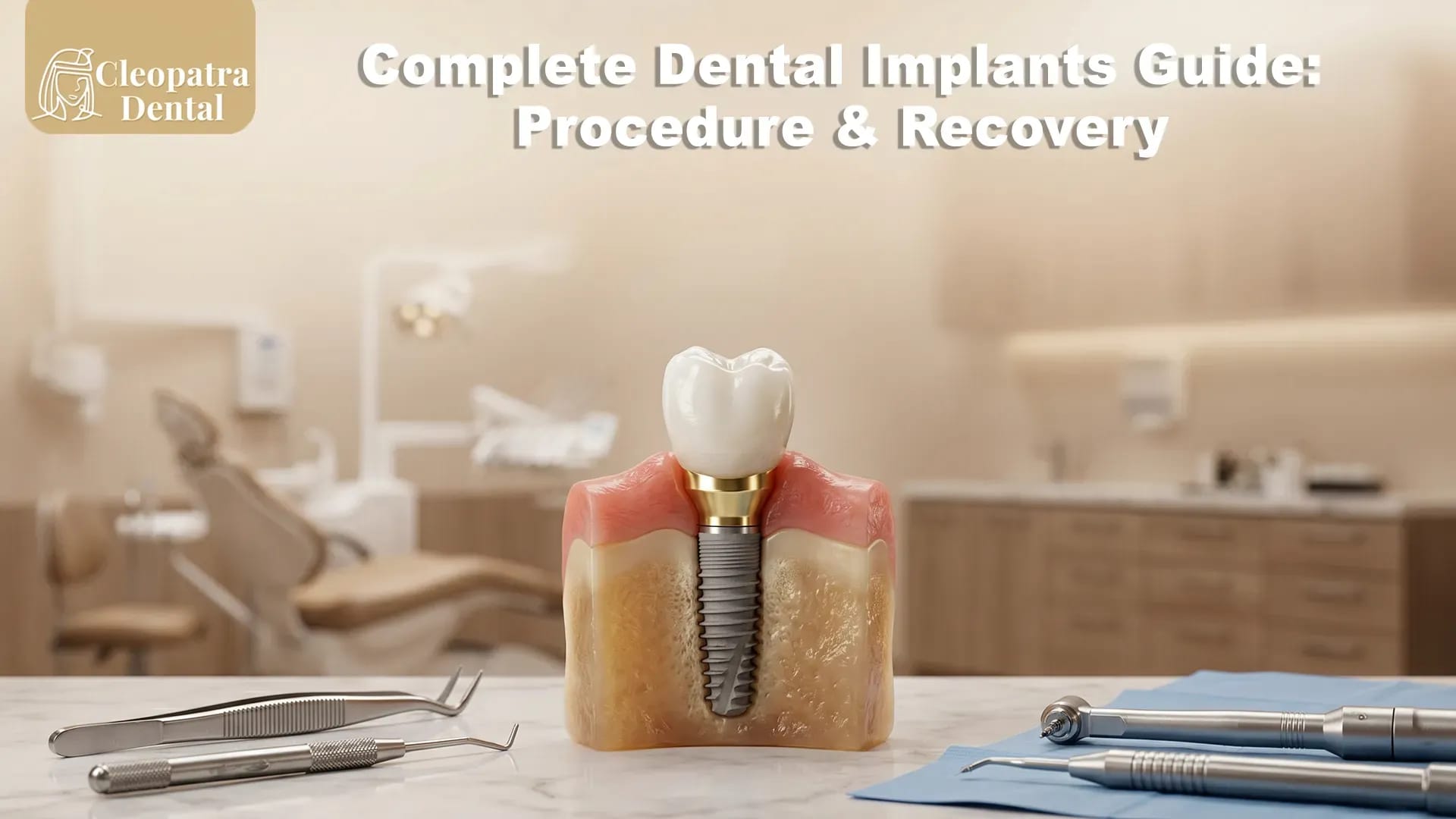
Dental implants are biocompatible, titanium fixtures surgically placed into the jawbone to replace missing tooth roots. Once fully integrated with the natural bone through a biological process called osseointegration, they serve as an incredibly stable foundation for dental crowns, bridges, or permanent dentures.Watch This Video From Dr. George Mirsal:
When Do You Need Dental Implants?
You may be an ideal candidate for dental implants if you have:- One or more missing teeth
- Severe tooth decay that cannot be restored
- Failing root canals
- Advanced gum disease (periodontitis)
- Loose, uncomfortable dentures
- Difficulty chewing your favorite foods
Why Are Dental Implants Important?
Compared to removable appliances, dental implants offer unmatched benefits. They actively help to:- Preserve the jawbone by stimulating bone growth
- Improve chewing efficiency, allowing you to eat tough foods
- Restore clear speech and self-confidence
- Provide a natural-looking, permanent solution ---
Dental Implant Procedures & Prosthetics
Types of Implant Procedures
Implants may be placed immediately after a tooth extraction or delayed for 3 to 6 months depending on the presence of infection, your bone quality, and necessary healing times.Bone and Soft Tissue Grafting
In some cases, the jawbone or gums need reinforcement before an implant can be safely placed:- Bone Grafting: Helps rebuild lost bone structure to provide a solid anchor for the implant.
- Soft Tissue Grafting: Improves gum thickness, aesthetics, and long-term implant stability.
Types of Implant Prosthetics
Depending on how many teeth you are missing, your restorative options include:- Single tooth implants
- Implant-supported bridges
- Snap-on overdentures
- Fixed implant dentures
- All-on-X full-arch restorations
Preparing for Implant Surgery
For your surgery to be successful, proper preparation is key. Patients must maintain excellent oral hygiene and carefully manage systemic medical conditions. For example, if you are diabetic, your HbA1c should ideally be below 7% for optimal healing and implant success.The Impact of Smoking on Implant Risks
Smoking significantly increases the risk of implant failure. It reduces blood supply, lowers oxygen delivery to the healing tissues, and impairs immune capacity. Smoking cessation before and after surgery is one of the most critical steps you can take to greatly improve your outcomes.How to Care for Dental Implants
While the titanium implants themselves cannot get cavities, the surrounding gums and bone can still become infected. To ensure longevity, follow these guidelines:- Daily Hygiene: Brush thoroughly and floss daily.
- Routine Visits: Maintain regular professional cleanings and attend routine dental evaluations to monitor implant stability and bone health.
- Follow Doctor's Orders: Adhere strictly to post-operative instructions, including smoking cessation and taking recommended vitamin D supplements if directed.
- Manage Bruxism: If you grind or clench your teeth (bruxism), get a proper diagnosis. Your dentist may provide a custom night guard to mitigate destructive forces that could fracture the restoration.
- Medical Transparency: Always disclose changes in your medical condition to your dental team.
Alternatives to Dental Implants
While implants are the gold standard, alternatives do exist, including traditional bridges, removable partial dentures (RPDs), and complete dentures. However, patients often find that removable partial dentures ("flippers") move during smiling or eating, making them feel insecure or "older." Traditional bridges involve cutting down healthy neighboring teeth to replace a missing tooth; while sometimes a valid solution, they do not preserve your underlying bone and can increase the structural stress on the supporting teeth over time.Frequently Asked Questions & Troubleshooting (FAQ)
I was told I need a "Sinus Lift" before my implant. What is that?
A sinus lift (or sinus augmentation) is a standard bone grafting procedure performed in the upper back jaw when there is insufficient vertical bone height. After upper molars are lost, the jawbone shrinks and the maxillary sinus naturally drops. During the procedure, the sinus membrane is gently elevated, and bone graft material is placed beneath it. Once healed, this creates enough strong bone to safely anchor your implant. Depending on your initial bone stability, the implant may be placed on the same day as the lift, or delayed for 4–9 months.What should I do if I feel numb after dental implant surgery?
Temporary numbness after lower jaw implant surgery can occur. In many cases, it is simply the lingering effect of local anesthesia and resolves within a few hours. However, the lower jaw houses the inferior alveolar nerve. If an implant is placed too close, or if swelling compresses the area, you may experience tingling, a "pins-and-needles" feeling, or partial numbness in your lip, chin, or tongue. What to do: If numbness persists beyond the expected anesthesia duration, contact your dentist immediately. Early evaluation is critical so your dentist can assess the area, relieve pressure if needed, and prescribe medications to support nerve recovery.What are the common complications after dental implant therapy?
Dental implants have incredibly high success rates, but like any surgical procedure, complications can occur:- Peri-implantitis (Infection): Swelling, bleeding, or bone loss around the implant. Reduced by excellent hygiene and smoking cessation.
- Failure to Integrate: Occasionally, the implant fails to fuse with the bone due to smoking, uncontrolled diabetes, or poor bone quality.
- Prosthetic Fracture: Overloading the implant with excessive bite forces (like heavy grinding) can cause screw loosening or crown fractures. A night guard is highly recommended for grinders.
Why do implants sometimes fail?
Implant failure is frustrating but rarely happens for a single reason. The most common contributing factors include:- Smoking: Drastically reduces healing ability.
- Uncontrolled Diabetes: Impairs immune response and bone healing.
- Poor Oral Hygiene: Plaque destroys supporting bone just like natural gum disease.
- Excessive Bite Forces: An unbalanced bite or severe grinding can overload and break the implant.
- Poor Positioning: Implants must be placed with the final bite in mind.
Why Choose Cleopatra Dental Yorba Linda?
At Cleopatra Dental Yorba Linda, we approach implant dentistry from a comprehensive functional and restorative perspective—we don't just "place implants."Prosthetically Driven Planning
Dr. George Mirsal plans every implant based on the final bite, smile design, force distribution, and long-term maintainability—not just where the most bone is available. We carefully calculate AP spread, cantilevers, and force vectors to ensure your implants can handle daily chewing forces for decades.Advanced Digital Dentistry & Same-Day Technology
We utilize state-of-the-art digital workflows, including:- CBCT 3D Imaging for pinpoint surgical precision
- Digital Intraoral Scanners (no messy traditional impressions)
- In-Office 3D Printing for rapid, highly accurate surgical guides and temporary restorations.
Premium Implant Systems
We strictly use premium, heavily researched implant systems such as Nobel Biocare and Straumann. These brands offer unparalleled manufacturing precision, excellent prosthetic compatibility, and decades of proven clinical success. Every patient at Cleopatra Dental Yorba Linda receives an individualized treatment plan tailored to their unique bone anatomy, medical health, and smile goals. References- AAID Dental Implant Information
- Nobel Biocare
- Straumann
- ADA Dental Implants Overview
- Cochrane Dental Implant Review
- NIH Dental Implant Article
- AAP Peri-Implant Disease Information
- NCBI Implant Failure Risk Factors Study
Learn more about our Endodontics services at Cleopatra Dental in Riverside & Yorba Linda, CA.
Table of Contents