How Long Do Temporary Dental Crowns Last? Care Rules & When to Call
October 17, 2026
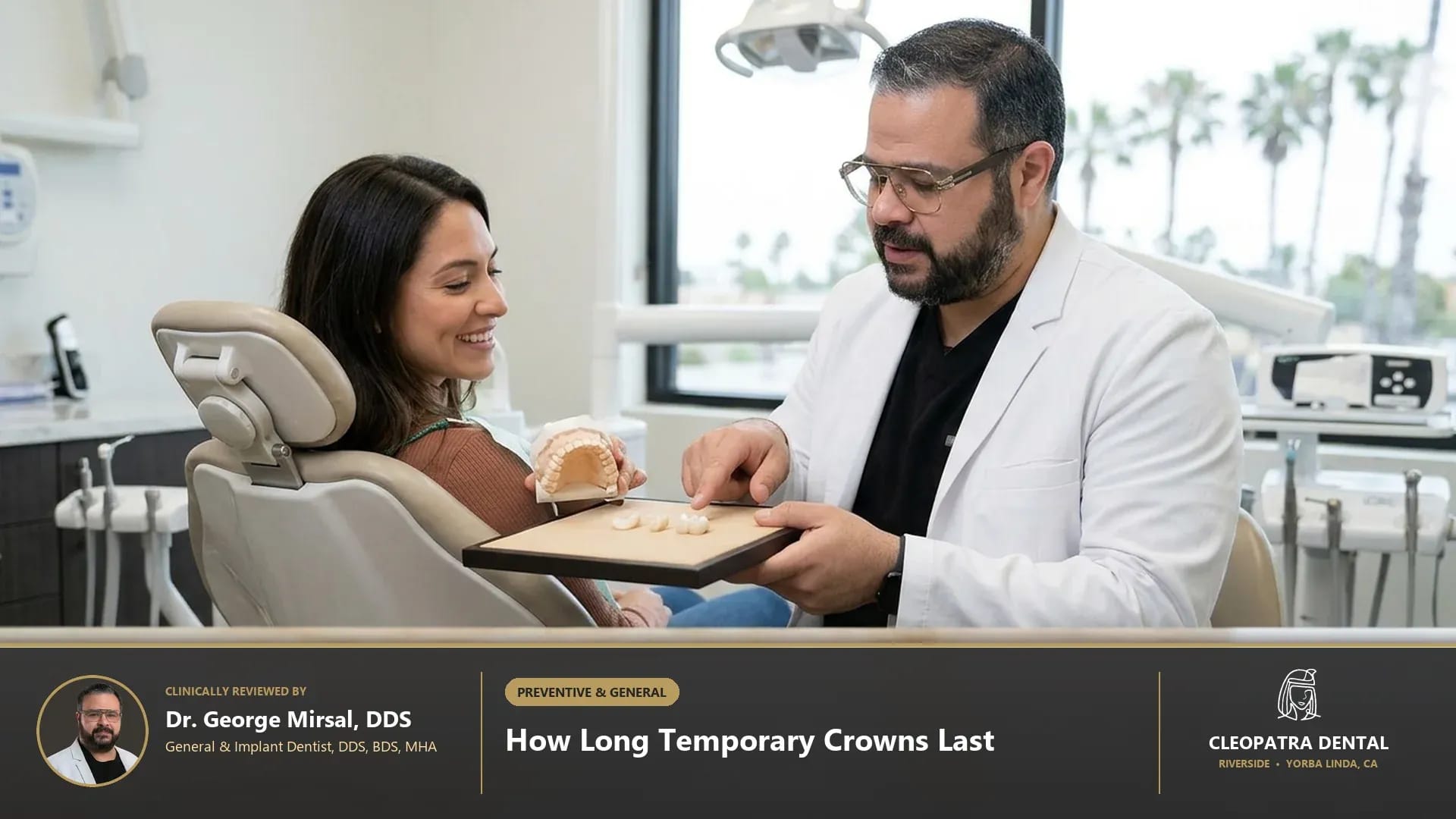
Quick Verified Summary: Dental crowns restore compromised teeth by providing full-coverage 360-degree coronal protection against masticatory forces. In Riverside and Yorba Linda, monolithic zirconia and IPS e.max ceramic crowns deliver exceptional flexural strength and lifelike esthetics. Temporary crowns shield prepared dentin for two to three weeks while custom laboratory restorations are precision-milled using digital intraoral scans.
Understanding Dental Crowns: Indications and Biomechanical Purpose
A dental crown, often referred to as a tooth cap, is a custom-engineered dental restoration that completely encases the visible portion of a compromised tooth above the gingival margin. When a tooth experiences extensive decay, structural fractures, or undergoes endodontic therapy, simple direct fillings can no longer withstand the high occlusal pressures exerted during chewing. In our modern clinical practices located in Riverside and Yorba Linda, our general dentists utilize advanced full-coverage crowns to restore structural integrity, prevent tooth loss, and re-establish harmonious dental occlusion. Protecting a structurally compromised or endodontically treated tooth begins with custom porcelain and zirconia crowns and bridges. Protecting a structurally compromised or endodontically treated tooth begins with custom porcelain and zirconia crowns and bridges.
When Does a Natural Tooth Require Full-Coverage Crown Restoration?
Preserving natural dentition is always the primary objective of conservative dentistry. However, certain clinical conditions necessitate the complete circumferential protection provided by a crown rather than a localized resin restoration or inlay: When pulpal infection precedes restoration, our clinicians coordinate root canal therapy and post-endodontic crown protection under one roof. When pulpal infection precedes restoration, our clinicians coordinate root canal therapy and post-endodontic crown protection under one roof.
- Extensive Dental Caries: When decay compromises more than 50% of the natural coronal tooth structure, remaining enamel walls become susceptible to catastrophic fracture under bite forces.
- Post-Endodontic Protection: Following root canal therapy, posterior molar and premolar teeth lose intrinsic moisture and vascular supply, rendering the dentin brittle. A full-coverage crown sealed with a resilient core buildup prevents coronal leakage and vertical root fractures.
- Cracked Tooth Syndrome: Micro-fractures traversing the marginal ridges cause sharp pain upon chewing release. Encircling the tooth with a rigid crown splints the cusps together, preventing fracture propagation into the dental pulp.
- Severe Enamel Attrition and Erosion: Chronic nocturnal bruxism, gastroesophageal reflux disease (GERD), or dietary acid exposure can wear down occlusal enamel, requiring vertical dimension rehabilitation.
- Aesthetic Smile Reconstruction: Severely discolored, malformed, or hypoplastic teeth can be transformed into symmetrical, natural-looking smiles using high-translucency ceramics.
Biomimetic Dentin Protection and Structural Reinforcement
The human bite can exert forces between 200 and 600 pounds of pressure per square inch on posterior molars. When natural enamel is severely depleted, these loads transfer directly into the underlying dentin, stressing the pulp chamber. Through biomimetic principles, our clinical team at Cleopatra Dental seals the freshly prepared dentin immediately using adhesive resin bonding agents. This prevents post-operative sensitivity, eliminates bacterial micro-leakage, and forms a unified structural monobloc with the definitive ceramic crown. If your provisional or permanent cap becomes loose, follow our emergency protocol on what to do when a dental crown cracks, loosens, or falls off. If your provisional or permanent cap becomes loose, follow our emergency protocol on what to do when a dental crown cracks, loosens, or falls off.
Comparison of Dental Crown Materials: Zirconia vs. E-max vs. PFM
Material science in prosthodontics has advanced dramatically over the past decade. Metal-free ceramics have largely replaced traditional metal-based restorations due to superior biocompatibility, tissue-friendly gingival integration, and uncompromised strength. Selecting the optimal crown material depends on the tooth's position in the arch, functional biting loads, cosmetic smile expectations, and whether the patient exhibits nocturnal teeth grinding habits.
Monolithic Zirconia: Extreme Flexural Strength for Posterior Molars
Zirconium dioxide (zirconia) is a high-performance ceramic often termed "ceramic steel." Monolithic zirconia crowns are milled from solid blocks of polycrystalline material, eliminating the risk of porcelain chipping. Modern 3Y-TZP and translucent 4Y/5Y formulations provide flexural strengths ranging from 800 to 1,200 megapascals (MPa), compared to only 100 to 150 MPa for natural tooth enamel. In our crowns and bridges department, monolithic zirconia is the preferred restorative material for first and second molars where biting forces peak. When healthy cusps can be preserved without a full crown, explore conservative porcelain inlays and onlays vs. full crowns. When healthy cusps can be preserved without a full crown, explore conservative porcelain inlays and onlays vs. full crowns.
IPS e.max Lithium Disilicate: Peak Optical Translucency for Anterior Smiles
For anterior incisors, canines, and premolars located prominently in the aesthetic smile zone, IPS e.max (lithium disilicate glass-ceramic) remains the global gold standard. Offering a flexural strength of 400 to 500 MPa, lithium disilicate provides lifelike light transmission, opalescence, and natural shade gradation that seamlessly mimics virgin tooth enamel. Because it can be adhesive-resin bonded to enamel and dentin, e.max requires minimal tooth reduction, conserving healthy tooth structure.
Porcelain-Fused-to-Metal (PFM) and Traditional Options
Porcelain-fused-to-metal (PFM) crowns served as the industry benchmark for over four decades, combining a cast metal alloy substructure with an overlaid porcelain veneer. While clinically reliable, PFM crowns present notable cosmetic drawbacks: the dark metal collar often creates an unsightly gray line along the gumline as tissues recede, and the brittle feldspathic porcelain veneer can chip over time under heavy mastication. Today, all-ceramic and monolithic zirconia restorations offer comparable or superior longevity without metal exposure. Protect eugenol temporary cement during chewing by choosing from our 50 soft foods to eat while wearing a temporary crown after a root canal. Protect eugenol temporary cement during chewing by choosing from our 50 soft foods to eat while wearing a temporary crown after a root canal.
| Crown Material | Flexural Strength (MPa) | Aesthetic Translucency | Ideal Arch Location | Biocompatibility |
|---|---|---|---|---|
| Monolithic Zirconia | 800 – 1,200 MPa | Moderate to High (4Y/5Y) | First & Second Molars, High-Force Bites | Exceptional, Highly Biocompatible |
| IPS e.max Lithium Disilicate | 400 – 500 MPa | Maximum Natural Translucency | Anterior Incisors, Canines, Premolars | Excellent, Biomimetic Glass-Ceramic |
| Porcelain-Fused-to-Metal (PFM) | Substructure > 500 MPa | Low (Opaque Metal Masking) | Posterior Multi-Unit Bridges | Good; Risk of Base Metal Sensitivity |
| Full Cast Gold Alloy | Not Applicable (Malleable) | Metallic Gold Tone | Second Molars with Minimal Clearance | Gold Standard Biocompatibility |
The Step-by-Step Dental Crown Clinical Procedure in Southern California
Receiving a high-precision dental crown at Cleopatra Dental typically involves a structured two-visit restorative protocol designed to ensure biological comfort, marginal fit, and long-term durability. Patients undergoing treatment at either our Riverside or Yorba Linda facility experience an organized, patient-first workflow.
Digital Intraoral Scanning vs. Traditional Elastomeric Impressions
Gone are the days of biting into trays filled with goopy, gag-inducing impression paste. Modern restorative dentistry utilizes high-resolution 3D optical intraoral scanners. These handheld digital wands capture thousands of surface data points per second, generating an interactive photorealistic 3D virtual model of your prepared tooth, neighboring contact points, and opposing bite. This digital dataset is instantly transmitted to our master dental laboratory via secure digital portals, eliminating impression distortion and accelerating fabrication timelines.
Precision Tooth Preparation and Marginal Gingival Troughing
The dental crown procedure begins with profound local anesthesia to ensure complete procedural comfort. Our general dentists meticulously shape the tooth, reducing 1.0 to 1.5 mm of circumferential enamel while creating a smooth chamfer or rounded shoulder margin. Special attention is paid to preserving the biological width—the natural 2 mm soft tissue seal between the bone crest and restorative margin—which prevents chronic gum inflammation and recession. Once the preparation is finished and scanned, a custom temporary crown is hand-sculpted and cemented chairside.
The Vital Role of Temporary Dental Crowns: Lifespan and Care Rules
Between your initial preparation appointment and the delivery of your permanent crown, a temporary (provisional) restoration plays a critical biological and functional role. Fabricated from high-grade polymethyl methacrylate (PMMA) or bis-acryl composite resin, the temporary crown is seated with a gentle, zinc oxide-based temporary cement designed to facilitate easy removal at your delivery visit.
How Long Do Temporary Acrylic or Bis-Acryl Crowns Actually Last?
Temporary crowns are specifically engineered as short-term protective restorations designed to last two to three weeks under normal clinical conditions. While high-grade bis-acryl resins can physically endure for several months, temporary cement gradually dissolves when exposed to oral fluids and enzymatic saliva. If left in place beyond six to eight weeks, saliva washes out from beneath the margins, allowing cariogenic bacteria to infiltrate the prepared dentin and cause rapid recurrent decay. Furthermore, adjacent teeth can drift slightly without stable occlusal contacts, complicating the seating of the final laboratory crown.
Dietary Restrictions, Flossing Techniques, and When to Call Your Dentist
Protecting your temporary crown requires simple behavioral adjustments during the two-week interim period:
- Avoid Sticky and Chewy Foods: Chewing gum, caramel, taffy, and gummy candies can easily dislodge the provisional restoration from the temporary cement.
- Avoid Hard, Crunchy Items: Biting into raw carrots, hard pretzels, ice cubes, or tough crusty bread can fracture the acrylic margins.
- Modified Flossing Technique: When cleaning between teeth, insert the dental floss normally, but never snap the floss upward past the contact point. Instead, pull the floss through horizontally from the cheek side to avoid catching the crown margin.
- When to Call Immediately: If your temporary crown becomes loose, falls off, or fractures, contact our office immediately. Exposed dentin can become exquisitely temperature-sensitive, and the prepared tooth can shift within 48 to 72 hours, preventing your permanent crown from fitting properly.
2026 Dental Crown Cost and Financing in Riverside & Yorba Linda
Understanding restorative dental investments is essential for Southern California families. The out-of-pocket cost for a dental crown depends on several clinical variables: the selected restorative material (zirconia, e.max, or porcelain), the necessity of an underlying core buildup or post to reinforce broken tooth structure, and your specific dental PPO plan benefits. Same-day provisional recementation and custom zirconia crown delivery are available at our Riverside crown and bridge clinic. Same-day provisional recementation and custom zirconia crown delivery are available at our Riverside crown and bridge clinic.
Dental Crown Fee Ranges and CDT Coding Overview
During your comprehensive clinical consultation, our dental team provides a transparent, itemized treatment estimate detailing the standard American Dental Association (ADA) CDT procedure codes utilized for insurance adjudication: Patients in Orange County can also schedule crown seating and bite adjustments at our Yorba Linda restorative dental office. Patients in Orange County can also schedule crown seating and bite adjustments at our Yorba Linda restorative dental office.
Important Pricing Note: The prices shown in the table below are estimated ranges; to obtain accurate pricing tailored to your specific clinical needs and insurance coverage, please contact our Riverside or Yorba Linda office.
| CDT Code | Procedure Description | Estimated Cost (Riverside & Yorba Linda, CA) | Typical PPO Insurance Coverage |
|---|---|---|---|
| D2740 | Crown — Porcelain / Ceramic Substrate (Zirconia or E-max) | $1,050 – $1,650 | 50% – 80% (Major Restorative) |
| D2750 | Crown — Porcelain Fused to High Noble Metal (PFM) | $1,100 – $1,700 | 50% – 80% (Major Restorative) |
| D2950 | Core Buildup, Including Any Pins When Required | $280 – $450 | 50% – 80% (Basic or Major Restorative) |
| D2920 | Recement or Re-Bond Indirectly Fabricated Crown | $120 – $220 | 50% – 80% (Basic Restorative) |
| D2975 | Provisional / Temporary Crown (Multi-Month Clinical Need) | $350 – $550 | Varies by Clinical Necessity |
PPO Insurance Coverage, CareCredit, and Flexible In-House Payment Options
Most dental PPO plans (including Delta Dental, MetLife, Cigna, Aetna, and Guardian) classify dental crowns as a major restorative benefit, commonly covering 50% of the contracted fee after your annual deductible is satisfied. If you have had root canal therapy performed on the tooth, the crown is virtually always deemed medically and dentally necessary. For uncovered balances or patients without dental insurance, Cleopatra Dental partners with CareCredit and Proceed Finance, offering 0% interest promotional financing terms for 6 to 24 months. We also provide transparent cash savings packages to ensure restorative care remains within reach.
Frequently Asked Questions About Dental Crowns in Riverside
How long does a permanent dental crown last?
With conscientious oral hygiene and regular preventive cleanings every six months, a high-quality monolithic zirconia or porcelain crown typically lasts between 10 and 15 years, and frequently exceeds 20 years. Maintaining healthy gums, brushing twice daily with fluoridated toothpaste, daily flossing around the crown margins, and wearing a protective nightguard if you grind your teeth are the primary determinants of long-term crown longevity.
What should I do if my temporary dental crown falls off over the weekend?
If your temporary crown comes off, gently clean the inside of the crown with warm water. You can temporarily re-seat it using a small dab of over-the-counter temporary dental cement or toothpaste to protect the exposed tooth from air and temperature sensitivity. Never use household superglue or permanent adhesives. Contact our Riverside or Yorba Linda office first thing Monday morning—or call our Saturday emergency line—so we can professionally re-cement the temporary crown.
Is getting a dental crown painful?
No. The preparation and placement of a dental crown is completed under profound local anesthesia, ensuring you feel zero sharp discomfort or pain during tooth shaping. You may feel gentle water spray and slight vibration. Following the appointment, mild gum tenderness near the margin is normal for 24 to 48 hours and is readily managed with over-the-counter anti-inflammatory analgesics such as ibuprofen or acetaminophen.
Can a tooth with a dental crown still develop a cavity?
While the ceramic or zirconia crown itself is impervious to bacterial acid decay, the underlying natural tooth root and the margin where the crown meets the tooth can still develop recurrent cavities. Diligent daily interdental flossing and brushing are critical to prevent plaque accumulation along the cervical margin of your crown.
Verified Branch & Location: Visit Cleopatra Dental in Riverside at 2955 Van Buren Boulevard, Ste H4, Riverside, CA 92503 (serving Arlington, La Sierra, Canyon Crest, Wood Streets, Orangecrest, and Corona near Van Buren Blvd and CA-91), or view directions and verified patient reviews on Cleopatra Dental Riverside prosthodontics on Google Maps.
Clinically & Technically Reviewed By:
Dr. George Mirsal, DDS, BDS, MHA — DDS - BDS - MHA, Clinical General Dentist
Dr. Engy Halim, DDS, BDS — DDS - BDS, Clinical General Dentist
Medical Disclaimer: This content is clinically reviewed for educational purposes in accordance with American Dental Association (ADA) and Dental Board of California guidelines and does not replace a direct in-person dental examination.