How Routine Dental Exams Save Lives: Oral Cancer & Systemic Links
November 7, 2026
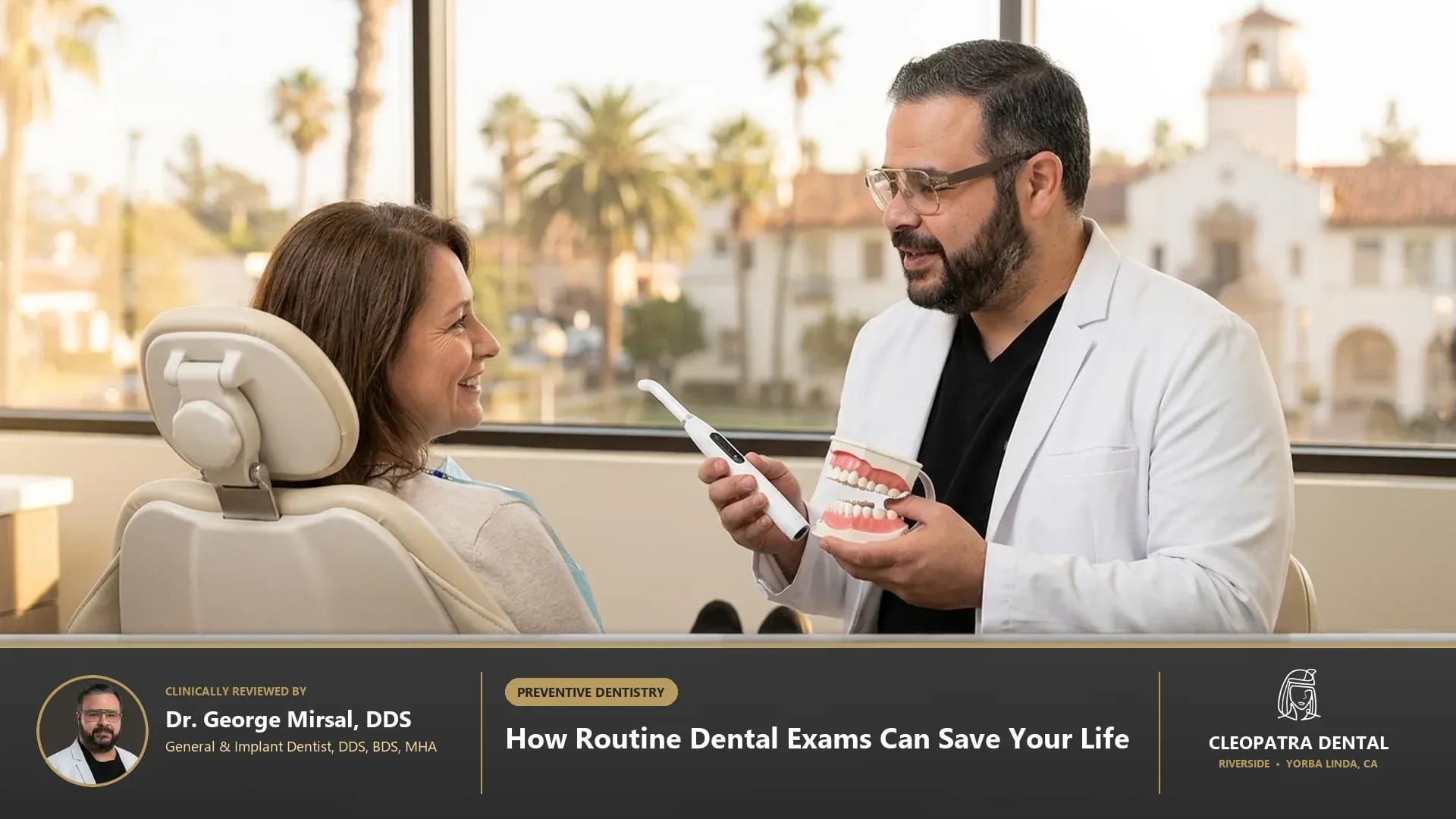
Quick Verified Summary: Your dentist in Riverside and Yorba Linda is a frontline primary-health partner whose routine oral examination (CDT D0120 and D0150) can literally save your life. Every 6-month visit includes a head, neck, and mucosal oral cancer screening (D0431), periodontal inflammation grading linked to cardiovascular and glycemic health, blood pressure checks, and sleep airway evaluation.
Clinical Foundations: Understanding How Routine Dental Exams Save Lives: Oral Cancer & Systemic Links
Patients researching how your dentist can save your life in Southern California deserve transparent, evidence-based guidance rooted in biological tooth preservation and long-term oral systemic health. At Cleopatra Dental, our general, restorative, and surgical clinicians evaluate every patient as a complete biomechanical system rather than treating isolated symptoms. In daily practice across Western Riverside County and North Orange County, we find that over 54,000 Americans are diagnosed with oral or oropharyngeal squamous cell carcinoma each year (driven increasingly by HPV-16 alongside tobacco and alcohol); when detected at Stage I/II during a 3-minute dental mucosal and lymph-node exam (CDT D0120 / D0431), the 5-year survival rate exceeds 85% to 90%, compared to under 40% when discovered late after lymph node metastasis. This diagnostic precision prevents guesswork, minimizes chairside discomfort, and establishes predictable clinical outcomes for families and older adults alike. Reducing systemic bacterial load and C-reactive protein inflammation begins with anti-inflammatory periodontal deep cleaning therapy.
Modern dentistry has evolved rapidly away from aggressive mechanical preparation toward minimally invasive, biologically guided care. When evaluating oral cancer screening dental exam, our diagnostic team examines how enamel thickness, underlying dentin tubules, periodontal ligament fibers, and occlusal biting forces interact over a 10- to 20-year horizon. By integrating digital optical scanning, low-dose imaging, and biocompatible materials coded under ADA CDT standards (D0120, D0150, D0431, D4341), we tailor each treatment plan to your specific anatomy, medical history, and comfort preferences. When chronic inflammation has compromised the protective mucogingival barrier, we also provide restorative periodontal gum grafting.
Biological & Biomechanical Principles Behind oral cancer screening dental exam
Every clinical decision in restorative and preventive dentistry depends on respecting microscopic tissue thresholds. Scientific studies confirm that in generalized moderate-to-severe periodontitis, the ulcerated pocket epithelium across 28 teeth equals an open wound the size of the palm of your hand (8 to 20 cm²), allowing *Porphyromonas gingivalis* lipopolysaccharides (endotoxins) and IL-6 / TNF-alpha cytokines to enter the systemic circulation during every meal—accelerating coronary endothelial dysfunction, elevating HbA1c in Type 2 diabetes, and posing infective endocarditis risks. When these quantitative parameters are carefully controlled at the chairside, natural dental tissues and prosthetic restorations withstand daily mastication forces—which routinely reach 70 to 150 pounds per square inch during normal chewing and exceed 250 pounds per square inch during nocturnal clenching—without premature wear, sensitivity, or structural fatigue. Protect your oral-systemic barrier between office visits by following what constitutes a proper daily ADA dental care routine at home.
Advanced Biomaterials and Digital Diagnostic Standards
Material science plays an equally decisive role in clinical longevity and biocompatibility. In our clinical protocols, we utilize bimanual submandibular and cervical lymph node palpation, lateral tongue border and floor-of-mouth gauze inspection, adjunctive autofluorescence mucosal screening (CDT D0431), automated oscillometric blood pressure monitoring, panoramic carotid artery atheroma visualization (D0330), and periodontal probing with bleeding-on-probing (BOP) indexing. Unlike legacy dental materials that relied on mechanical wedging or high-expansion metals, contemporary ceramic, polymer, and biologic systems bond adhesively or integrate directly with host tissues. This seals out cariogenic oral bacteria, maintains neutral salivary pH balance, and delivers natural optical translucency that blends seamlessly with your surrounding smile. See how biannual biofilm removal prevents subgingival bacteremia in why visiting the dentist every 6 months for a cleaning is essential.
Side-by-Side Clinical Comparison & Candidacy Matrix
Choosing the right clinical pathway requires comparing treatment modalities across biological conservation, expected service life, patient comfort, and maintenance requirements. During your consultation, our doctors review high-resolution intraoral photographs with you on a chairside monitor so you can see exactly what we see. The clinical comparison matrix below summarizes how each diagnostic and therapeutic option performs in real-world practice. Learn how diagnostic imaging uncovers asymptomatic bone and vascular signs in how digital dental X-rays detect silent jaw pathology and carotid calcifications.
| Life-Threatening Systemic Condition | Oral or Radiographic Sign Checked by Your Dentist | Biological Oral-Systemic Mechanism | Life-Saving Action Triggered at Your Dental Visit |
|---|---|---|---|
| Oral & Oropharyngeal Cancer (SCC / HPV-16) | Non-healing red/white ulcer (> 14 days) on lateral tongue, floor of mouth, or soft palate + firm neck lymph node | Dysplastic epithelial transformation often painless in Stage I/II | Early mucosal screening (D0431) & prompt biopsy referral boosts survival to 85%–90% |
| Cardiovascular Disease, Stroke & Hypertension | Generalized bleeding gums (periodontitis), chairside BP >= 140/90, or calcified carotid plaque on panoramic X-ray (D0330) | Periodontal bacteremia (*P. gingivalis*) enters bloodstream and inflames arterial plaques | Chairside blood pressure alert to cardiologist + periodontal scaling (D4341) to lower systemic CRP |
| Uncontrolled Type 2 Diabetes & Pre-Diabetes | Rapidly recurring periodontal abscesses, fruity breath (ketoacidosis), xerostomia, and candidiasis | Two-way cycle: hyperglycemia impairs neutrophil healing while gum cytokines worsen insulin resistance | Treating gum infection lowers HbA1c by ~0.4% (equivalent to adding a second diabetes medication) |
| Spreading Odontogenic Infection (Ludwig’s Angina / Sepsis) | Bilateral submandibular/floor-of-mouth board-like swelling, elevated tongue, fever >= 101°F, or difficulty swallowing | Untreated molar abscess spreads through fascial planes toward the airway or cavernous sinus | Immediate operative drainage (D7510) or emergency hospital airway intervention |
How We Customize Candidacy for Complex Medical Histories
No two mouths age or heal identically. Patients managing systemic conditions such as Type 2 diabetes, hypertension, autoimmune disorders, osteoporosis, or medication-induced dry mouth (xerostomia) require customized dental protocols. Before initiating treatment related to gum disease and heart disease connection, we review your current medications, allergies, and systemic health markers. Adjusting local anesthetic buffering, selecting hypoallergenic metal-free ceramics, and reinforcing salivary mineral buffering ensures safe, predictable healing for every age group. Explore how our dentists screen for life-threatening nocturnal hypoxia in what untreated sleep apnea does to your heart, blood oxygen, and teeth.
Preventing Common Complications and Premature Failure
Even the finest dental restoration or preventive regimen requires protection against mechanical overload and bacterial biofilm accumulation. In clinical audits, the two leading causes of preventable dental breakdown are unaddressed nighttime teeth grinding (sleep bruxism) and interproximal plaque stagnation along the gumline. Addressing occlusal harmony early and establishing an easy-to-follow home care routine protects both your natural enamel and any restorative work for decades.
Long-Term Maintenance & Preventive Follow-Up in Southern California
Sustaining healthy clinical results over 10 to 20 years depends on partnering with a consistent dental team that monitors your gum attachment levels, bite balance, and restorative margins at every six-month checkup. At our Riverside and Yorba Linda locations, we combine ultrasonic hygiene care, digital bitewing monitoring, and occlusal nightguard checks to catch micro-changes long before they become costly emergencies.
2026 Cost Guide, ADA CDT Codes & PPO Insurance in Riverside and Yorba Linda
Financial clarity is a core pillar of patient trust at Cleopatra Dental. Treatment fees in Southern California vary according to diagnostic complexity, the number of teeth or quadrants involved, laboratory biomaterial selection, and your dental PPO insurance benefits. Before any procedure begins, our treatment coordinators verify your insurance eligibility and provide a clear, written breakdown organized by official American Dental Association Current Dental Terminology (CDT) codes.
Important Pricing Note: The prices shown in the table below are estimated ranges; to obtain accurate pricing tailored to your specific clinical needs and insurance coverage, please contact our Riverside or Yorba Linda office.
| Preventive & Systemic Screening Service (ADA CDT) | Estimated Cost & Price Range (2026) | Inclusion in Routine Checkups & PPO Coverage |
|---|---|---|
| Periodic or Comprehensive Oral Exam + Head/Neck Cancer Check (D0120 / D0150) | $65 – $145 | Visual & palpation oral cancer and blood pressure check included at every exam; 80%–100% PPO coverage |
| Adjunctive Pre-Diagnostic Mucosal Screening Test (D0431) | $45 – $95 | Enhanced fluorescence tissue visualization for high-risk or suspicious mucosal areas |
| Panoramic Radiograph with Carotid & Jaw Bone Screening (D0330) | $115 – $195 | Screens entire jawbone for silent cysts, tumors, and calcified vascular plaques; 80%–100% PPO coverage |
| Periodontal Scaling & Root Planing — Per Quadrant (D4341) | $225 – $395 per quadrant | Eliminates chronic subgingival bacterial ulceration to protect heart and glycemic health |
Maximizing Dental PPO Insurance, HSA/FSA Funds & 0% Financing
Most PPO dental insurance plans categorize diagnostic exams, digital X-rays, and routine cleanings under preventive benefits covered at 80% to 100%, while basic and major restorative procedures receive 50% to 80% coverage up to your annual plan maximum (typically $1,500 to $2,500 per calendar year). For treatments that exceed annual insurance caps or involve elective cosmetic enhancements, patients can apply tax-free Health Savings Account (HSA) or Flexible Spending Account (FSA) dollars, or enroll in 0% APR promotional monthly financing through CareCredit, LendingClub, and Proceed Finance.
Step-by-Step Clinical Protocol & Long-Term Care Guidelines
Knowing exactly what happens before, during, and after your visit eliminates dental anxiety and empowers you to participate actively in your oral health. Our clinical workflow enforces co-reviewed by supervising dentists Dr. George Mirsal, DDS and Dr. Engy Halim, DDS alongside Registered Dental Hygienist Tiffany Anderson, RDH per California B&P Code § 1907–1926: immediate oral surgery biopsy referral for any red/white (erythroplakia/leukoplakia) lesion persisting > 14 days, urgent medical referral for hypertensive crisis (>= 180/120 mmHg), and non-surgical periodontal therapy (D4341) that lowers HbA1c by ~0.4% in diabetic patients. By breaking complex care into calm, well-paced stages, we ensure your comfort from initial check-in through long-term maintenance. Comprehensive head-and-neck oral cancer screenings, blood pressure vitals, and periodontal-systemic evaluations are performed at Cleopatra Dental in Riverside, CA.
Step 1: Comprehensive Digital Assessment and Shade/Bite Mapping
Your appointment begins with a conversation about your goals, symptoms, and past dental experiences, followed by gentle digital diagnostics. Using radiation-free iTero 3D optical scanning, intraoral high-definition cameras, and ultra-low-dose digital radiographs when indicated, we map your teeth, gums, and bite registration within minutes—eliminating messy impression trays and providing an immediate 3D visual roadmap of your mouth. Orange County patients receive identical life-saving oral-systemic screenings at our Yorba Linda preventive and family dental office.
Step 2: Precision Chairside Execution and Post-Care Verification
During active care, we prioritize profound comfort using topical numbing gels, pH-buffered local anesthetics, and optional nitrous oxide or oral conscious sedation. Every margin, contact point, and biting surface is verified under high magnification before you leave the chair. You also receive written post-visit care instructions and a direct follow-up call from our clinical team to confirm your recovery is progressing smoothly.
Frequently Asked Questions About How Routine Dental Exams Save Lives: Oral Cancer & Systemic Links
What is my dentist looking for when they hold my tongue with gauze and feel my neck?
That 2-minute check is a life-saving oral, head, and neck cancer screening! Over 70% of intraoral cancers develop along the sides (lateral borders) and underside of the tongue or the floor of the mouth—areas you rarely inspect in the mirror. By gently moving your tongue and palpating your jaw and neck lymph nodes, your dentist can spot tiny, painless Stage I changes years before symptoms appear.
Why does the dental hygienist or assistant check my blood pressure before a dental cleaning?
Because high blood pressure (hypertension) is the "silent killer" with zero symptoms, and many patients visit their dentist twice a year far more regularly than their physician! Checking your blood pressure ensures local anesthetics are chosen safely and has helped countless Cleopatra Dental patients discover undiagnosed hypertension before a stroke or heart attack could occur.
Can treating gum disease really help lower blood sugar in patients with diabetes?
Yes! The American Diabetes Association and American Academy of Periodontology recognize a bidirectional link between diabetes and gum disease. Clinical trials show that completing periodontal deep cleaning (scaling and root planing, CDT D4341) reduces systemic inflammatory cytokines enough to lower Hemoglobin A1c (HbA1c) by an average of 0.4% over 3 to 4 months.
When should I ask my dentist to check a sore or spot in my mouth right away?
Normal canker sores, cheek bites, or thermal pizza burns heal within 7 to 10 days. Any red patch (erythroplakia), white patch (leukoplakia), ulcer, lump, or numb area on your tongue, gums, lips, or palate that lasts longer than 14 days—especially if it does not hurt—should be examined by our dentists immediately.
Verified Branch & Location: Visit Cleopatra Dental in Riverside at 2955 Van Buren Boulevard, Ste H4, Riverside, CA 92503 (serving Arlington, La Sierra, Canyon Crest, Wood Streets, Orangecrest, and Corona near Van Buren Blvd and CA-91), or view directions and verified patient reviews on Cleopatra Dental Riverside oral cancer screening and oral-systemic wellness center on Google Maps.
Clinically & Technically Reviewed By:
Dr. George Mirsal, DDS, BDS, MHA — General & Implant Dentist
Dr. Engy Halim, DDS, BDS — General & Cosmetic Dentist
Tiffany Anderson, RDH, BBA — Registered Dental Hygienist (Supervised by DDS per CA B&P § 1907–1926)
Medical Disclaimer: This content is clinically reviewed for educational purposes in accordance with American Dental Association (ADA) and Dental Board of California guidelines and does not replace a direct in-person dental examination.